
Fun Preschool Pencil Control Worksheets
Strong early writing habits begin with simple hand movements. Before children are ready to form letters and numbers, they benefit from activities that encourage steady pencil movement, visual attention, and hand-eye coordination.
This preschool pencil control worksheet pack gives young learners a playful way to practice these early skills. Children can work through different lines, patterns, paths, and mazes while becoming more comfortable using a pencil.
A Fun Way to Practice Pre-Writing Skills
Pre-writing activities give children a chance to explore how a pencil moves across a page. Rather than focusing on perfect letters, children can first practice basic strokes and patterns.
These exercises can help children become familiar with moving a pencil:
- Up and down
- From left to right
- At an angle
- Around curves
- Through repeated patterns
- Along guided paths
With repeated practice, these movements can become easier and more natural.
Why Pencil Practice Matters for Preschoolers
Using a pencil involves more than simply holding it. Children coordinate their hands and eyes while deciding where and how the pencil should move.
Regular pre-writing activities may help children practice:
- Fine motor skills
- Hand-eye coordination
- Pencil movement
- Visual tracking
- Direction awareness
- Attention and concentration
- Confidence during early writing activities
These foundational skills can be useful later when children begin practicing letters, numbers, shapes, and drawings.
Explore Different Pencil-Control Activities
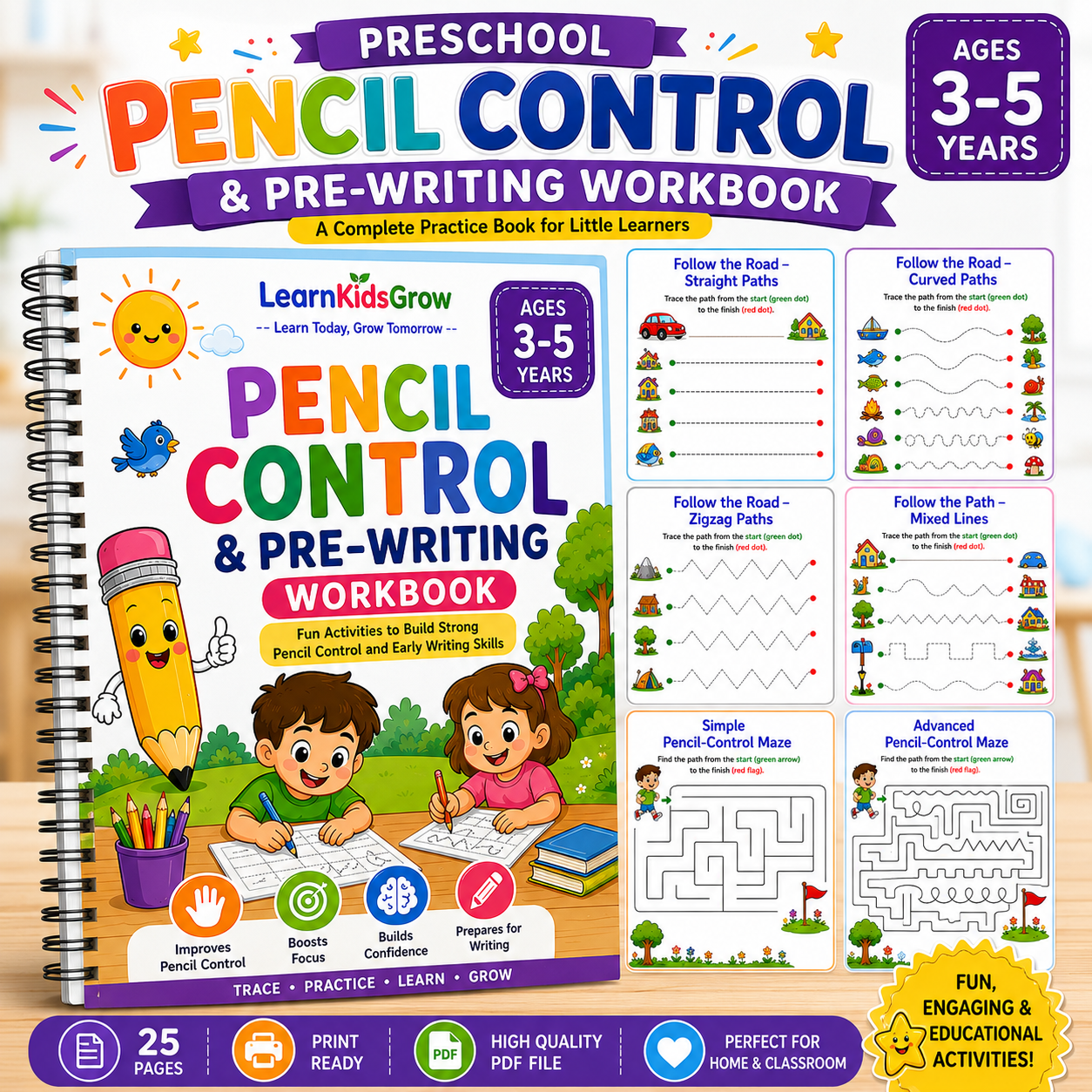
The worksheet pack includes several types of pre-writing practice, giving children opportunities to try different pencil movements.
Standing Line Practice
Children follow vertical strokes by moving their pencil from the upper part of the page toward the bottom. This introduces controlled up-and-down movement.
Sleeping Line Practice
Horizontal strokes encourage children to guide their pencil across the page. These simple movements provide another opportunity to practice direction and control.
Slanting Line Practice
Diagonal strokes add a different direction to pencil practice. Children can follow angled lines while working on steady hand movement.
Curved Line Activities
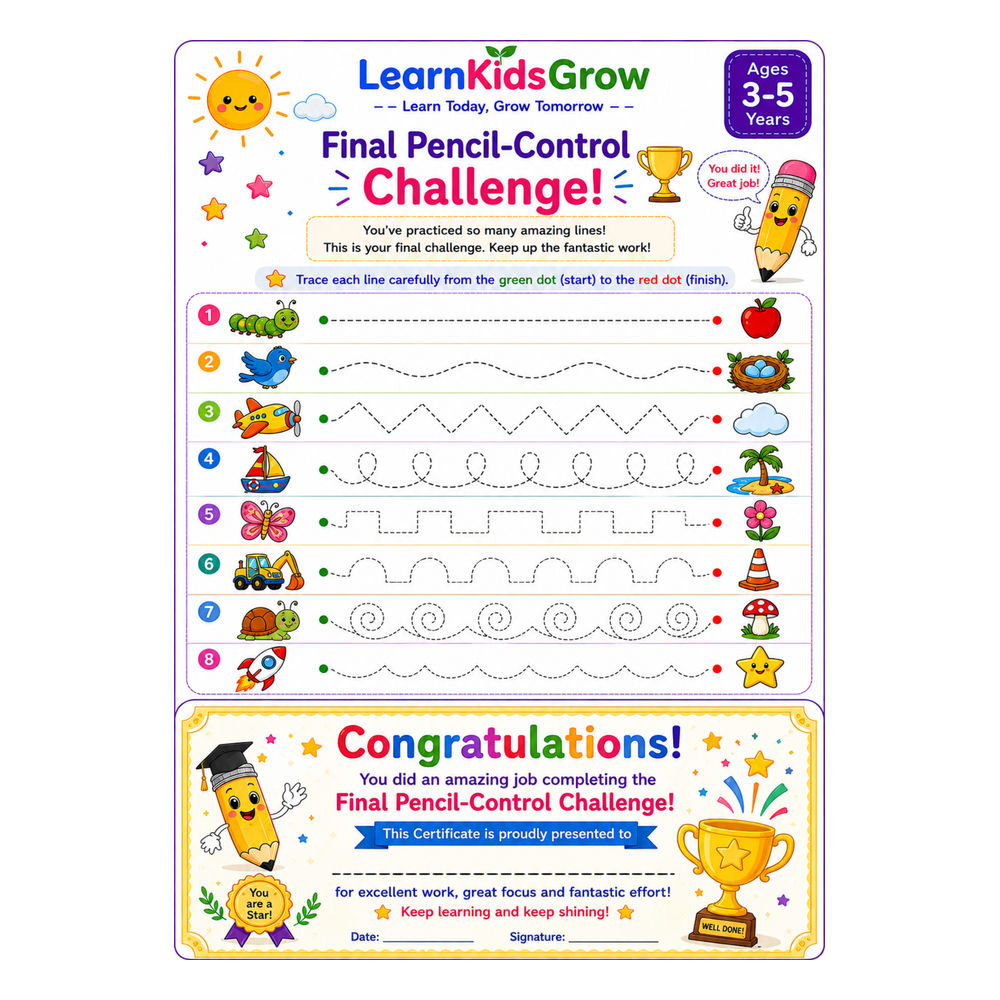
Curved patterns encourage children to move smoothly around bends instead of only traveling in straight directions. This adds variety to their pre-writing practice.
Zigzag Patterns
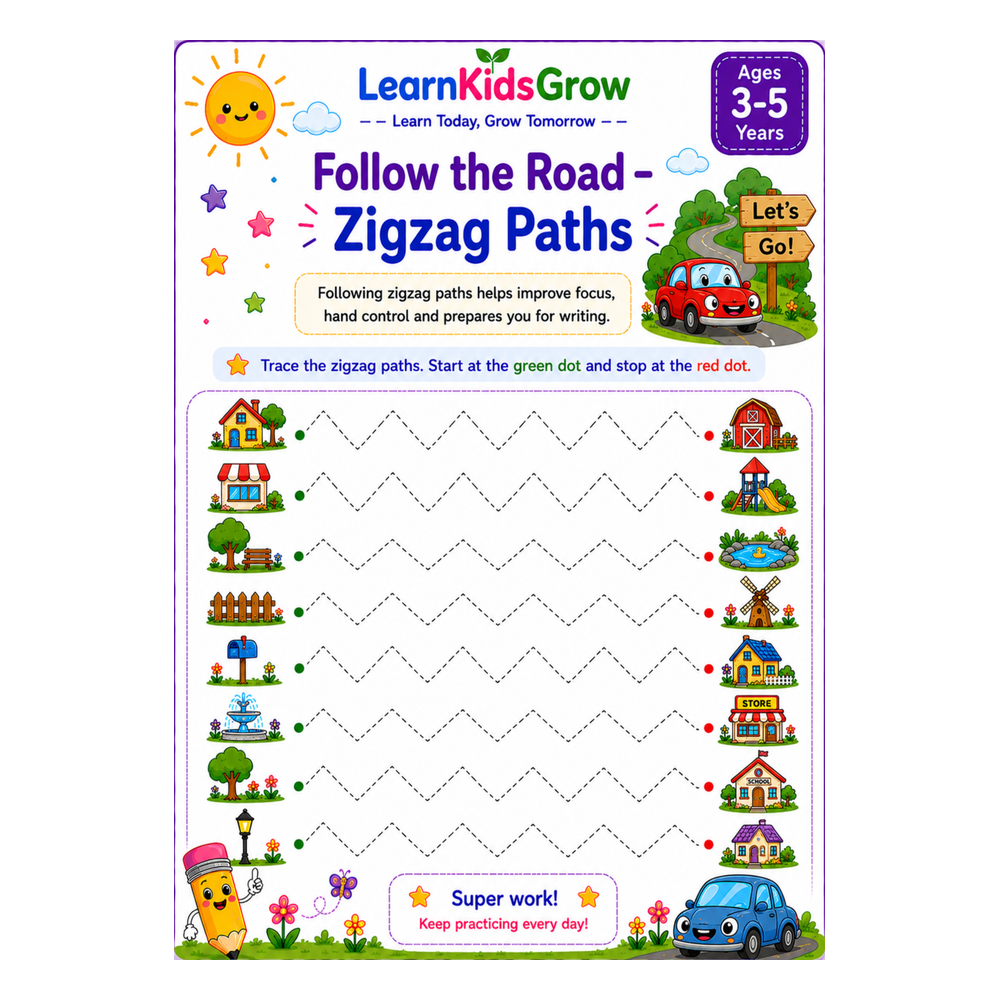
Zigzag activities involve several changes in direction. Children can practice keeping their pencil moving while following a repeating pattern.
Looping Activities
Loops introduce rounded, continuous movements. Repeating these shapes gives children another way to practice smooth pencil control.
Wave Patterns
Wave activities feature flowing movements that travel across the page. They encourage children to maintain a steady motion while following the pattern.
Simple Pencil Paths
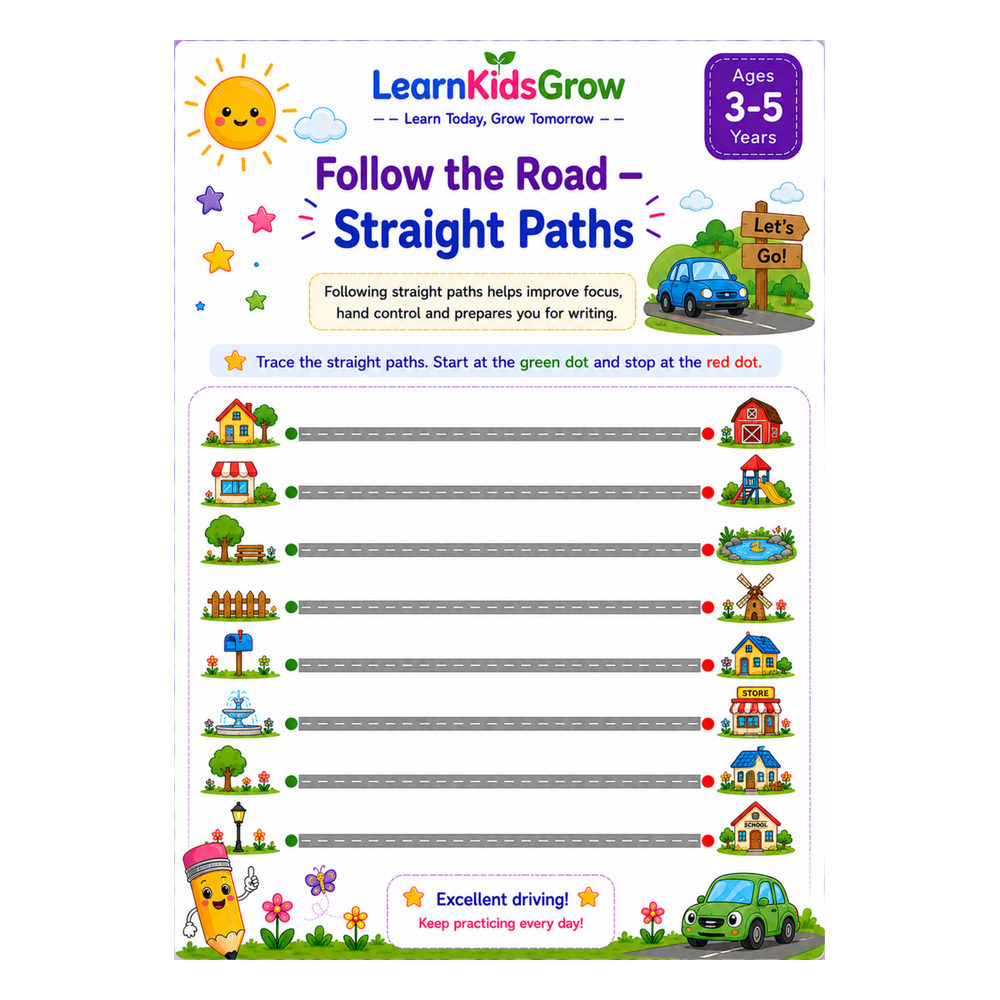
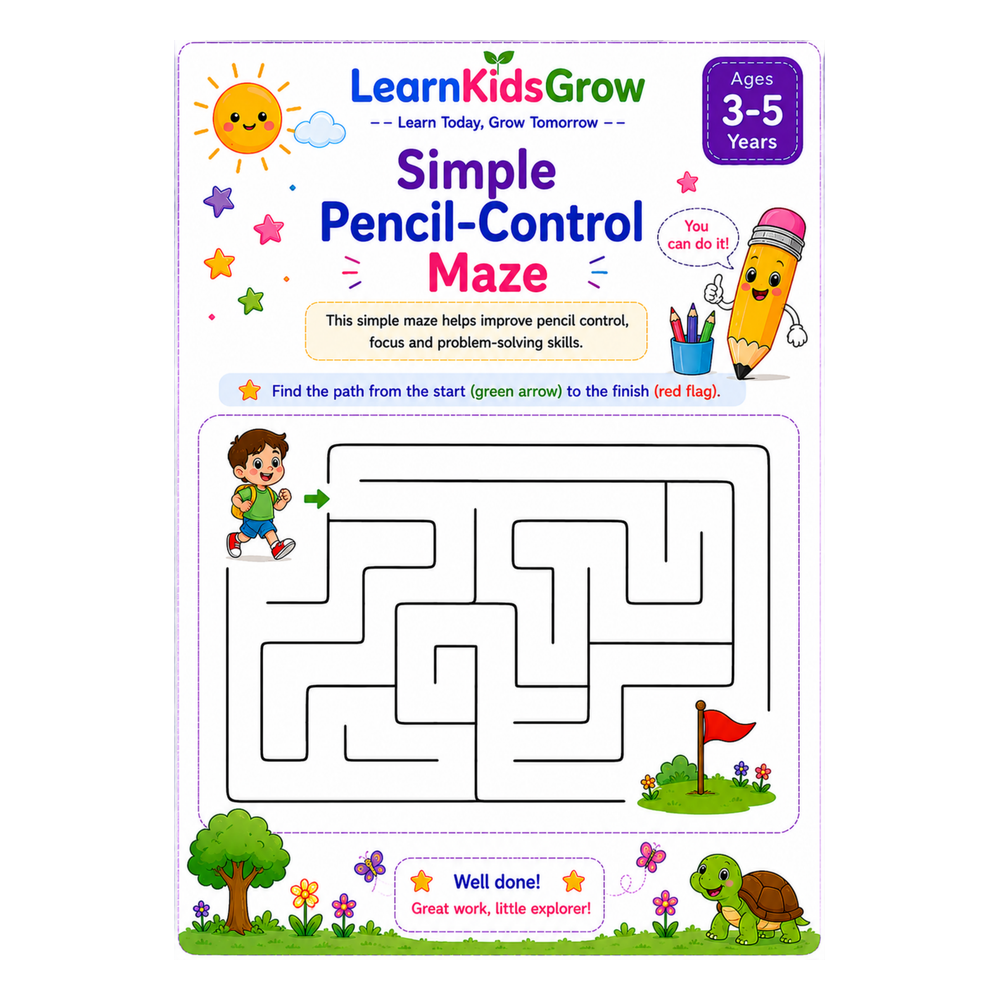
Guided paths give children a clear starting point and destination. They can practice moving their pencil along the route while paying attention to the boundaries.
Pencil-Control Mazes
Mazes turn pencil practice into a small challenge. Children guide their pencil through pathways and try to reach the finish without leaving the route.
Skills Children Can Practice
Each activity offers a slightly different type of movement. Together, the worksheets provide varied opportunities for early pencil practice.
Hand control: Children can work on making more deliberate pencil movements.
Eye-hand coordination: Following a printed path requires children to coordinate what they see with how they move their hand.
Visual attention: Patterns and paths encourage children to watch where their pencil is going.
Movement direction: Different strokes introduce vertical, horizontal, diagonal, curved, and continuous movements.
Concentration: Completing a pattern or maze gives children a simple goal to focus on.
Who Can Use This Printable Pack?
This activity pack can be useful for families and educators looking for simple pre-writing practice.
It can fit naturally into:
- Preschool learning
- Homeschool activities
- Home practice
- Classroom work
- Early-learning centers
- Quiet activity time
- Fine motor practice
Parents and teachers can select pages according to the child’s current skill level.
Simple Ways to Use the Worksheets
There is no need to complete the entire pack in one sitting. A few minutes of focused practice can be enough for a young learner.
Try this approach:
- Select a suitable worksheet.
- Provide a comfortable pencil or crayon.
- Show the child how to begin if necessary.
- Let them follow the lines or paths independently.
- Encourage careful and relaxed movements.
- Give positive feedback for their effort.
- Move to a new pattern when they are ready.
Keeping the activity relaxed can help children enjoy the learning process.
Helpful Tips for Pencil-Control Practice
A few simple habits can make worksheet time more enjoyable.
- Begin with straightforward patterns.
- Introduce harder movements gradually.
- Encourage children to take their time.
- Keep practice sessions short and manageable.
- Use a writing tool that feels comfortable.
- Focus on effort rather than perfect results.
- Allow children to repeat activities they enjoy.
- Give encouragement as their control improves.
The purpose is practice, not perfection.
Turn Worksheet Time Into Play
Pre-writing practice does not have to feel like a formal lesson. Children can choose their favorite pages or add a little creativity to the activity.
For example, after completing a path, they could draw something at the destination. A maze can also become part of a simple pretend adventure where a character needs to find its way home.
Small touches like these can make pencil practice more enjoyable.
When Can Children Begin Pencil-Control Activities?
Children reach early writing milestones at different times. Many preschoolers can start exploring basic lines and patterns once they show an interest in drawing, coloring, or using writing tools.
Begin with easier movements and offer more complex patterns as the child’s confidence grows.
There is no need to rush. Allowing children to practice at a comfortable level can make the experience more positive.
Printable Practice for Home and Classroom
Printable worksheets offer a convenient option for parents and educators. Pages can be printed when needed and used during home learning, preschool activities, or additional practice sessions.
Having several different patterns in one pack also gives children more variety than repeating the same type of stroke every time.
Encourage Confident Early Writing
Writing develops gradually through many small steps. Giving children opportunities to practice controlled movements can help them become more familiar with pencils and pre-writing patterns.
From straight lines and curves to loops, waves, paths, and mazes, this activity pack provides a playful introduction to the movements children can explore before moving into more advanced handwriting practice.
Frequently Asked Questions
What is a preschool pencil control worksheet?
It is a printable early-learning activity that gives young children opportunities to practice guiding a pencil through lines, patterns, paths, and simple challenges.
What skills can children practice with these worksheets?
The activities can support fine motor development, hand-eye coordination, visual tracking, pencil movement, concentration, and awareness of different directions.
What activities are included in the pack?
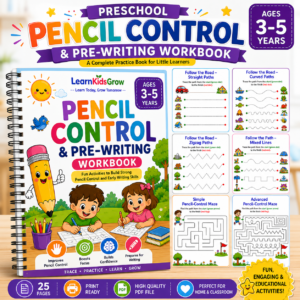
The pack includes standing lines, sleeping lines, slanting lines, curved lines, zigzag patterns, loops, waves, simple paths, and pencil-control mazes.
Are these worksheets suitable for preschool children?
Yes. They are designed around basic pre-writing movements that can be introduced to preschool-age learners according to their individual readiness.
Can I use these worksheets at home?
Yes. Parents can print the pages for home learning, practice sessions, or quiet educational activities.
Can preschool teachers use this pack?
Yes. Teachers can use the pages for individual practice, classroom activities, learning centers, or additional pre-writing work.
Can children use crayons instead of pencils?
A pencil, colored pencil, or crayon can be used depending on the child’s comfort and the type of activity.
How long should a child practice pencil control?
Short sessions are often a practical choice for young children. The amount of practice can be adjusted according to the child’s attention span and interest.
Does pencil control practice teach children to write letters?
These worksheets focus on pre-writing movements rather than direct letter instruction. The activities can provide practice with basic movements that are useful before more advanced handwriting work.
Does my child need to finish every page?
No. Children can work through the activities gradually. Repeating easier pages or moving forward when they feel ready is perfectly fine.
Make Early Pencil Practice Enjoyable
Give young learners a simple way to explore pencil movement with fun preschool pencil control worksheets. With lines, curves, loops, waves, paths, and mazes, children can practice early pre-writing movements through engaging printable activities.
Reviews
There are no reviews yet.