
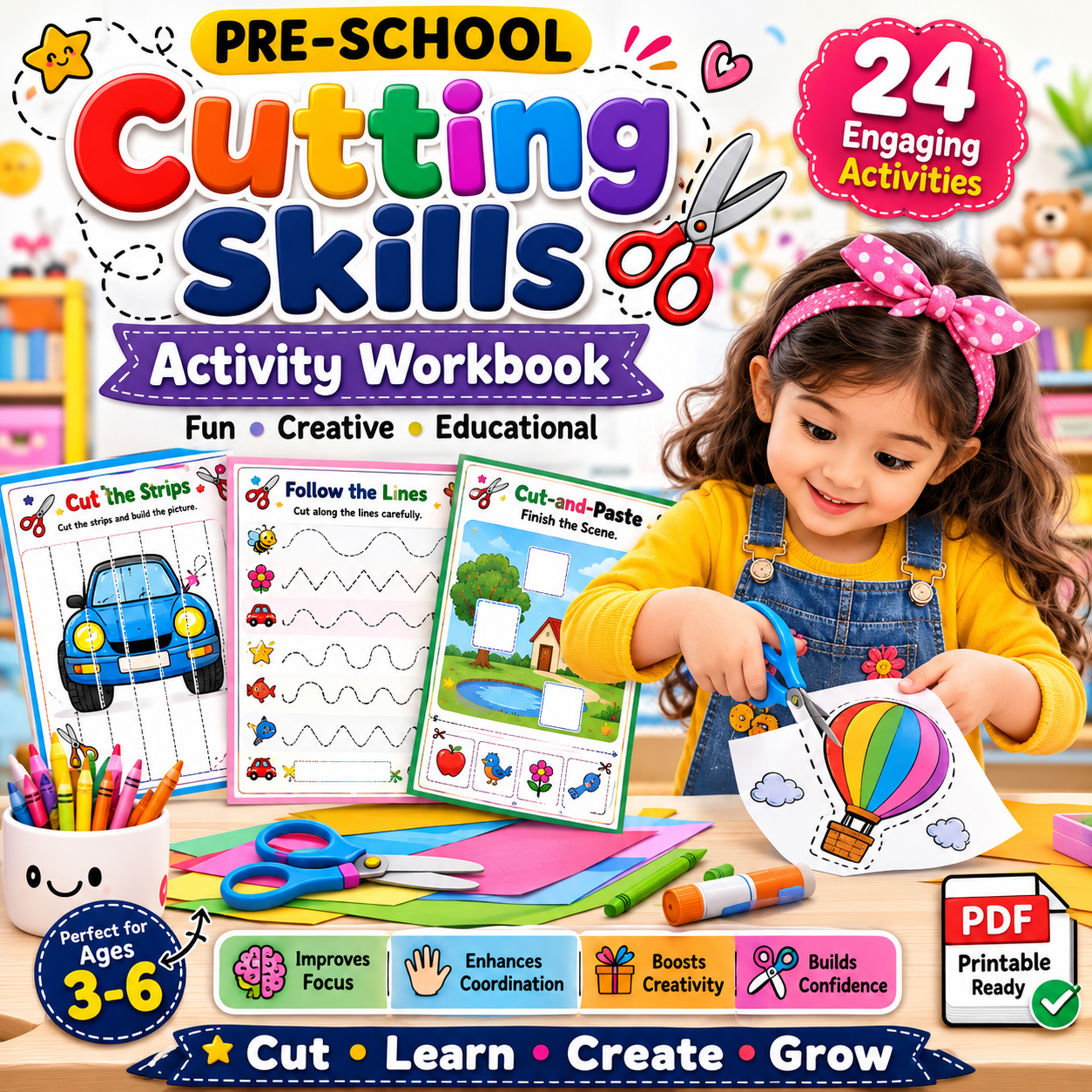
Creative Cutting Worksheets for Kids 3–5
Learning to use scissors can be an exciting milestone for preschool children. Cutting activities give young learners a chance to practice opening and closing scissors, following a path, turning paper, and working with both hands together.
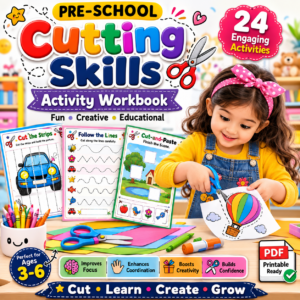
Creative Cutting Worksheets for Kids 3–5 provide structured practice through simple cutting tasks that gradually introduce different movements. The pack includes straight lines, curved paths, shapes, cut-and-sort activities, cut-and-paste tasks, and simple scissor challenges.
What Children Can Practice
This printable collection gives children several ways to build confidence with scissors.
The activities include:
- Straight-line cutting
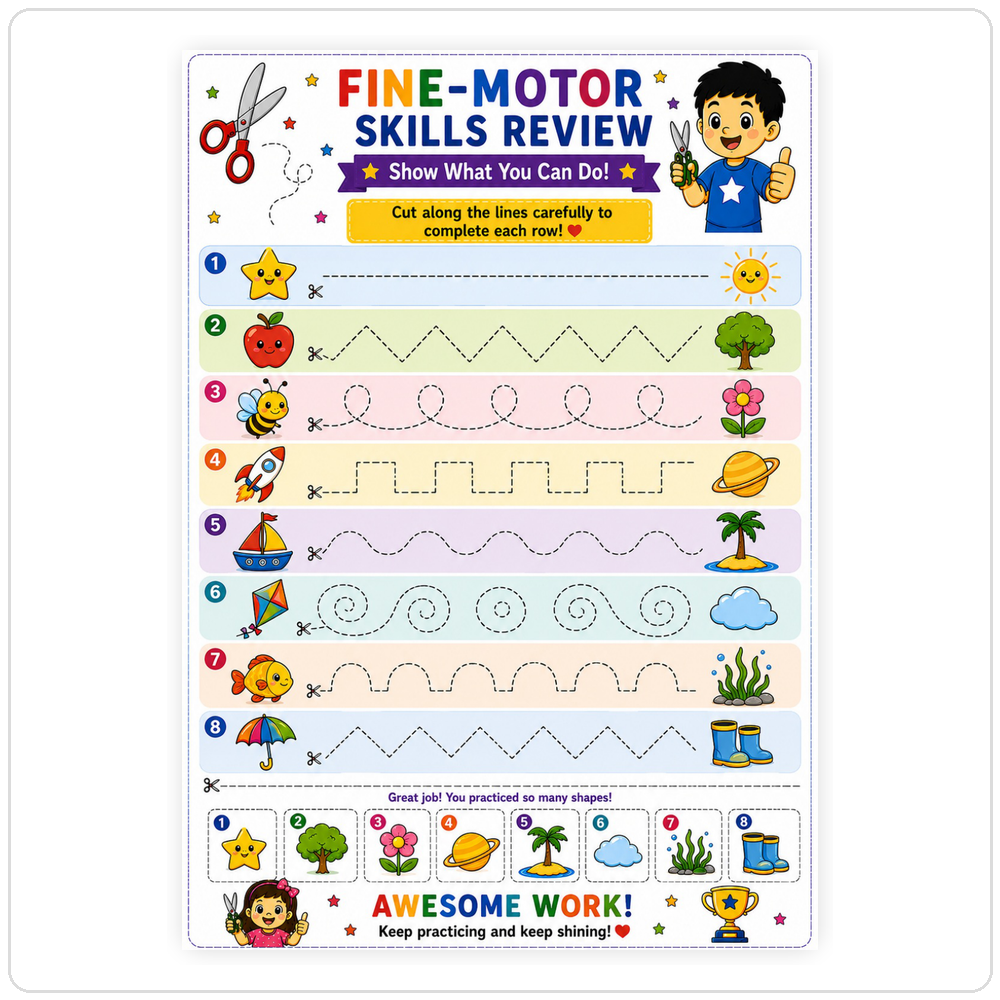
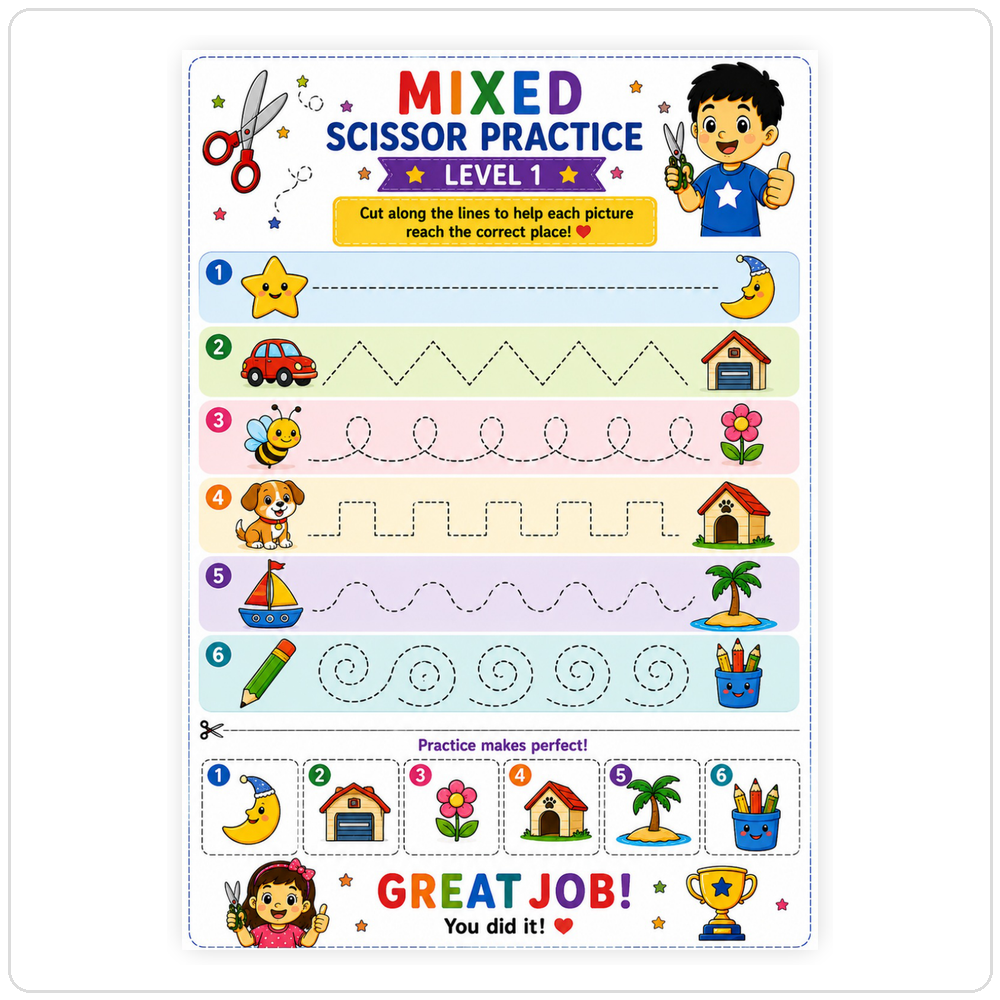
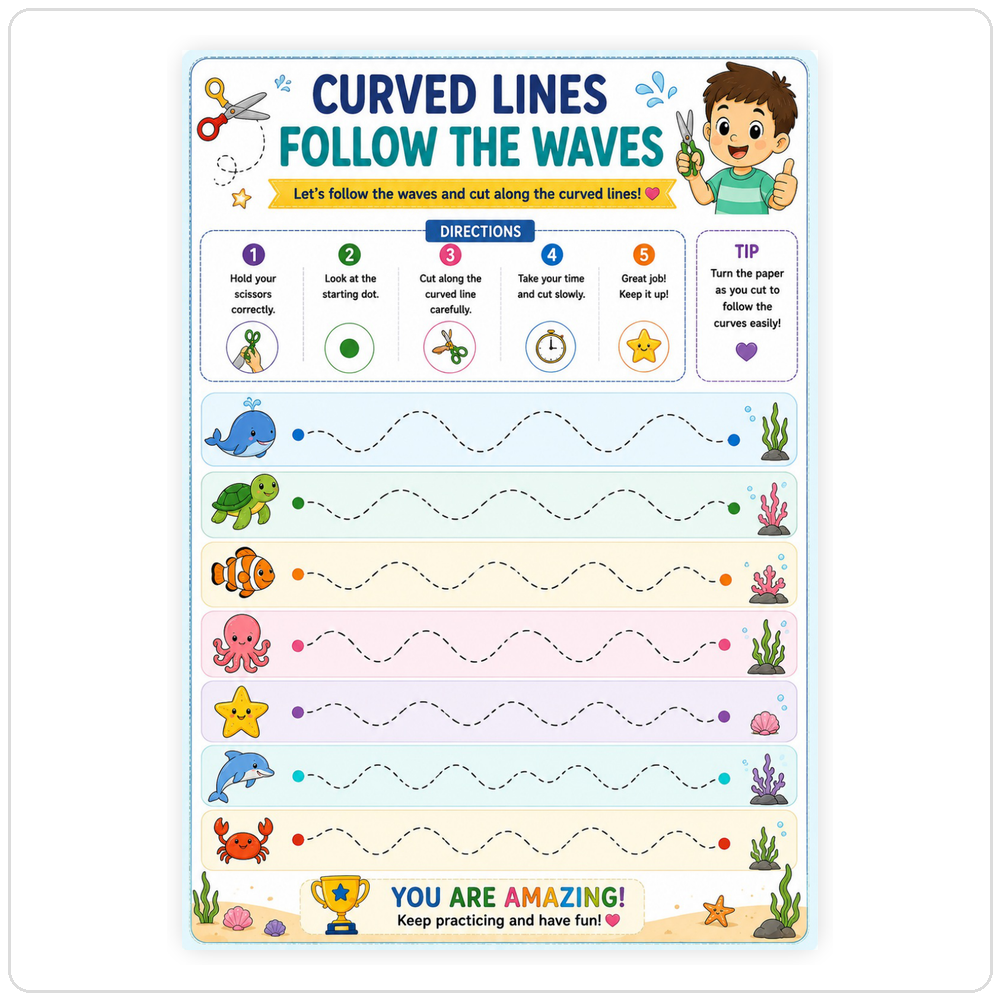
- Curved-line cutting
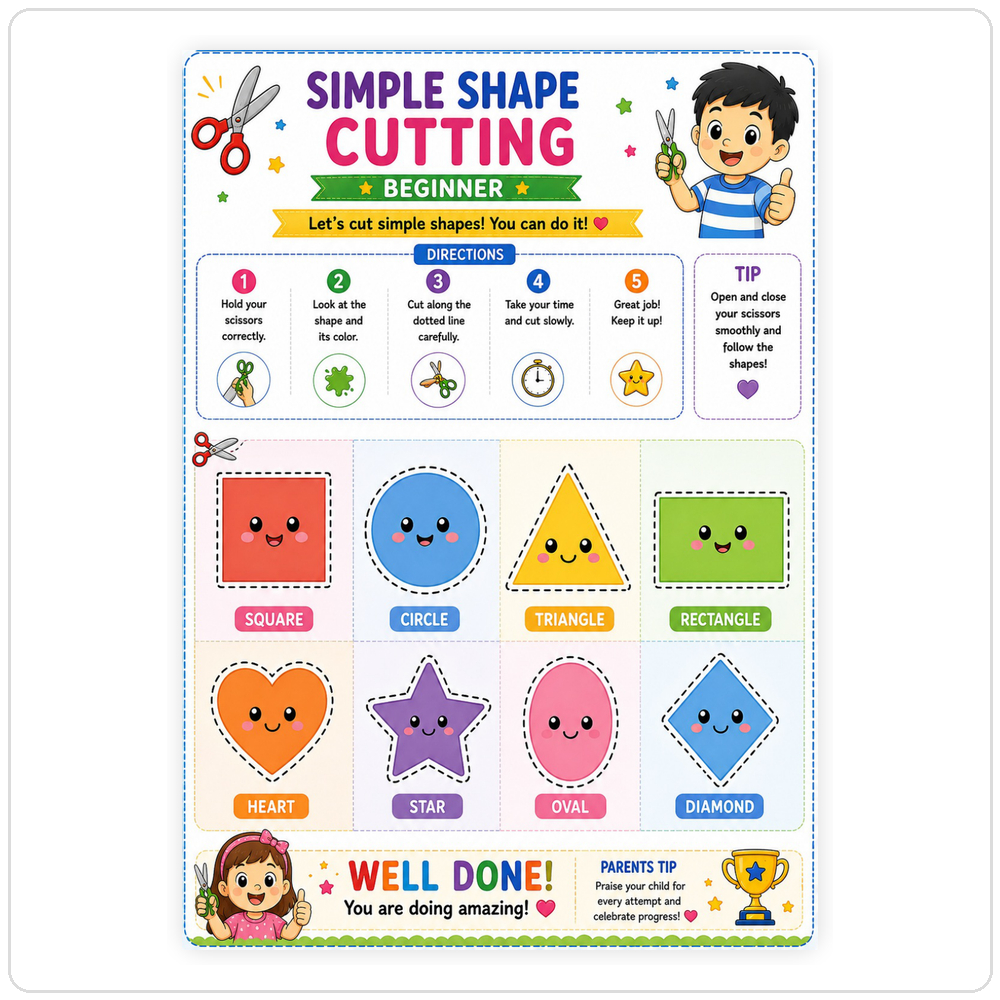
- Shape cutting
- Cut-and-sort
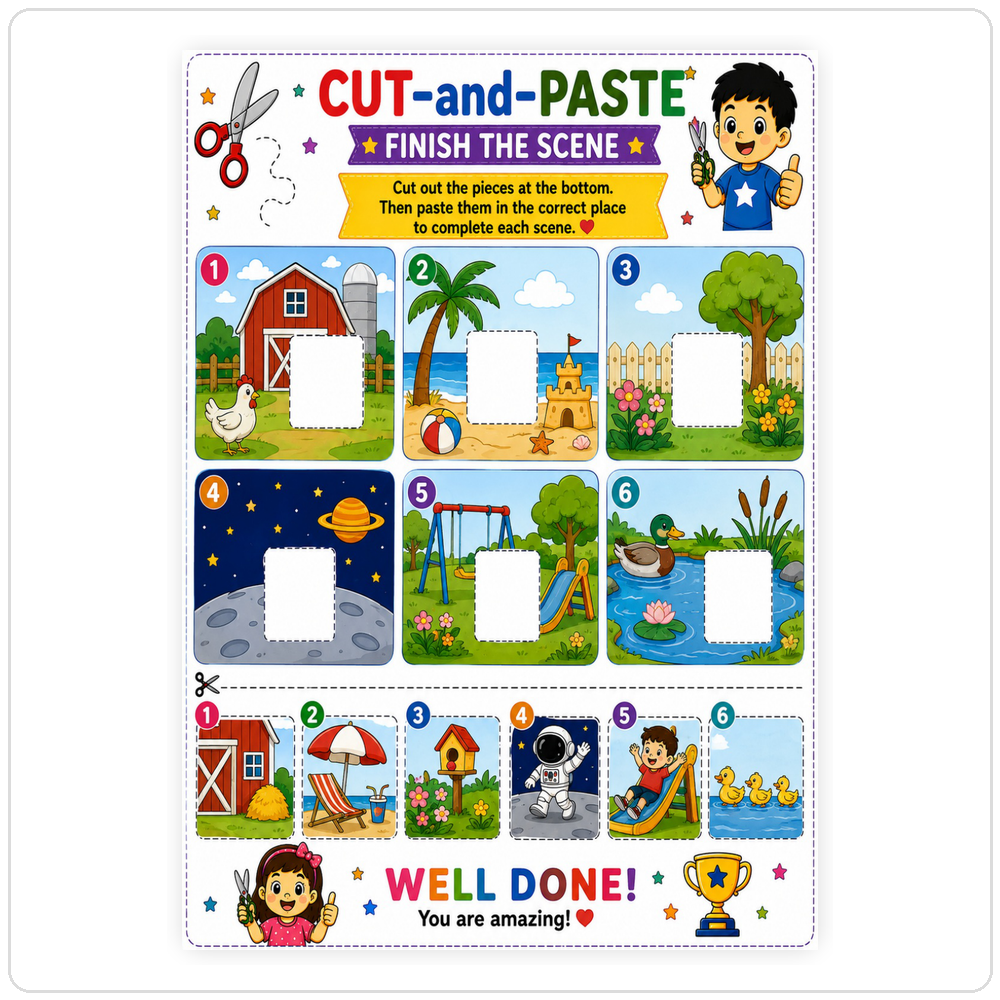
- Cut-and-paste
- Simple scissor activities
Each type of worksheet offers a different kind of cutting experience.
Start With Straight Lines
Straight-line pages are a natural starting point for children who are becoming familiar with scissors.
Children follow clear horizontal, vertical, or angled cutting guides while practicing steady hand movements. These activities can help them learn to keep their scissors moving along a defined route.
Move on to Curved Paths
Curved lines introduce more movement because the child needs to guide the scissors around bends.
Instead of cutting in one direction, children gradually learn to adjust their hand position while following the printed path.
These pages provide a simple way to make cutting practice a little more challenging.
Practice Cutting Basic Shapes
Shape-cutting worksheets give children the opportunity to cut around recognizable forms.
They may work with simple outlines and practice changing direction as they move around corners or curves.
The activity can also reinforce familiarity with basic shapes while keeping the main focus on scissor practice.
Try Cut-and-Sort Activities
Cut-and-sort pages combine cutting with an organizing task.
Children cut out selected pictures or pieces and then place them into the appropriate group. This gives the activity a purpose beyond simply cutting along a line.
The main goal is to encourage controlled cutting while completing a simple sorting task.
Cut, Arrange, and Paste
Cut-and-paste activities add another hands-on step.
Children first cut out pieces and then place them in their correct locations. This can involve several actions in sequence: cutting, handling the pieces, deciding where they belong, and attaching them.
These activities can make fine-motor practice feel more like a creative project.
Simple Scissor Challenges
The pack also includes easy scissor activities that provide additional opportunities to practice.
These pages can be used after children become comfortable with basic cutting lines. They add variety without making the learning experience unnecessarily complicated.
Why Cutting Practice Matters
Using scissors involves coordinated hand movements. One hand operates the scissors while the other helps hold and position the paper.
Cutting activities can give preschoolers opportunities to practice:
Hand Coordination
Children learn to coordinate the movements of both hands while working with paper and scissors.
Fine Motor Control
Opening and closing scissors repeatedly involves controlled finger and hand movements.
Visual Guidance
Following a printed cutting line encourages children to watch the path while moving their hands.
Focus
A cutting task gives children a clear visual goal and encourages them to stay with the activity.
Confidence
Successfully completing a simple cutting page can make children more comfortable with using scissors.
A Gradual Cutting Routine
It can be helpful to introduce activities from easier to more challenging.
Begin with uncomplicated straight paths. Once children are more comfortable, offer curved lines and simple shapes. Later, introduce cut-and-sort, cut-and-paste, and other multi-step activities.
This approach gives children time to become familiar with each new movement.
How to Use the Worksheets
Prepare a comfortable workspace with enough room for the child to hold the paper and use scissors safely.
A simple session can look like this:
- Choose one suitable worksheet.
- Explain where the child should cut.
- Demonstrate the movement when needed.
- Let the child try independently.
- Encourage slow, controlled cutting.
- Help only when necessary.
- Move to another activity when the child is ready.
Short sessions are often easier for preschool learners than long periods of repetitive practice.
Tips for Better Scissor Practice
A few simple habits can make cutting activities more enjoyable.
- Use child-appropriate scissors.
- Encourage the child to sit comfortably.
- Start with wide, easy-to-follow cutting lines.
- Remind children to move slowly.
- Allow breaks when they become tired.
- Praise effort and progress.
- Keep the cutting activity supervised.
The aim is to build skill and confidence rather than expect perfect cutting immediately.
Safe Scissor Use
Scissors should always be used with appropriate adult supervision, particularly with young children.
Choose scissors designed for the child’s developmental level and follow the manufacturer’s guidance. Teach children to keep scissors pointed in a safe direction and to use them only for the intended activity.
Cutting practice should take place in a suitable area with an adult nearby.
Use the Worksheets at Home
Parents can include cutting activities in a simple screen-free learning routine.
A child might complete one straight-line page on one day and try a curved-line or shape activity later. As confidence develops, more involved cut-and-paste pages can be introduced.
The worksheets can also be combined with drawing, coloring, or other appropriate craft activities.
Use Them in Preschool
Teachers can incorporate the pages into fine-motor stations, classroom centers, or individual practice.
A teacher can first demonstrate how to follow the cutting line and then allow children to work at their own pace. Different activities can be offered to children according to their current experience with scissors.
What Ages Are These Worksheets For?
These activities are intended for children around 3–5 years old, with the exact difficulty adjusted according to each child’s readiness and prior experience.
Some children may be comfortable with basic cutting earlier, while others may need more time and repetition. Adults can begin with simple pages and progress gradually.
More Than Just Cutting
Cutting worksheets can support more than scissor practice.
When children cut pictures and then sort or paste them, they combine fine-motor actions with visual attention, organization, and following a task sequence.
This makes the activity useful as part of a broader preschool learning routine.
A Creative Screen-Free Activity
Printable cutting pages offer an easy alternative to screen-based entertainment. Children can work with paper, scissors, and simple visual instructions while producing something they can see and handle.
The hands-on nature of the activities can make practice feel more engaging than repetitive drills.
Why Choose This Cutting Activity Pack?
The collection brings several cutting experiences together in one resource. Children can progress from basic paths to more involved tasks without switching to a completely different type of activity.
With straight lines, curves, shapes, sorting, pasting, and simple challenges, there is plenty of variety for repeated practice.
Build Confidence One Cut at a Time
Scissor skills develop through practice. A child may begin by making short cuts along a straight line and gradually become more comfortable navigating curves, corners, and shapes.
Creative Cutting Worksheets for Kids 3–5 provide a simple way to encourage that progression through printable, hands-on activities.
Frequently Asked Questions
What are preschool cutting worksheets?
Preschool cutting worksheets are printable pages that give young children guided opportunities to practice using scissors through lines, shapes, pictures, and simple hands-on tasks.
What activities are included?
The pack includes straight-line cutting, curved-line cutting, shape cutting, cut-and-sort, cut-and-paste, and simple scissor activities.
What age are these worksheets designed for?
They are intended for children approximately 3–5 years old, while individual readiness can vary.
What skills can children practice?
Children can practice scissor control, hand coordination, fine-motor movements, visual tracking, attention, and completing simple multi-step tasks.
Should a child start with straight lines?
Straight lines can be a useful starting point because they are generally easier to follow than curves or more complex outlines.
Are shape-cutting activities included?
Yes. The pack includes activities that let children practice cutting around simple shape outlines.
What are cut-and-sort worksheets?
In cut-and-sort activities, children cut out pictures or pieces and then place them into the correct category or group.
What are cut-and-paste activities?
These pages require children to cut out pieces and then attach or place them in the correct location to complete the activity.
Can parents use these worksheets at home?
Yes. They can be used as home-learning, fine-motor, or screen-free activities with appropriate supervision.
Can preschool teachers use them?
Yes. Teachers can use the pages for individual practice, classroom centers, small groups, or fine-motor activities.
What kind of scissors should children use?
Use scissors designed for young children and appropriate for their developmental level. Adult supervision is recommended throughout the activity.
How long should children practice cutting?
There is no fixed session length. Short activities with breaks can work well for young children, especially when they are still becoming familiar with scissors.
What if my child has difficulty following the lines?
Start with an easier worksheet, demonstrate the cutting path, and give the child time to practice. Avoid rushing or expecting perfect results.
Can these worksheets be repeated?
Yes. Repeating simpler cutting activities can provide additional practice and help children become more comfortable with scissor movements.
Reviews
There are no reviews yet.