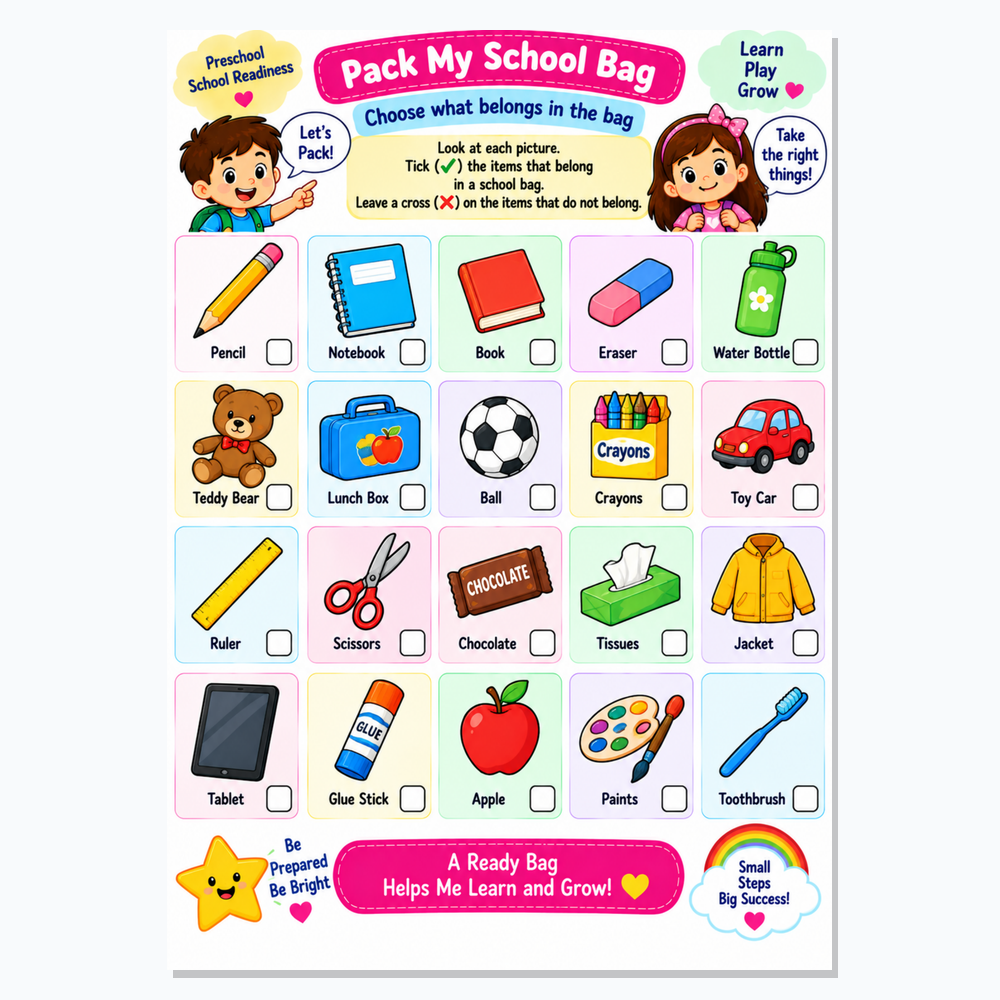
Ultimate School Readiness Worksheets for Kids
Starting school is a big step for a young child. There are new places to explore, routines to understand, classroom materials to use, and simple expectations to learn. Helping children become familiar with these ideas before kindergarten can make the transition feel more comfortable.
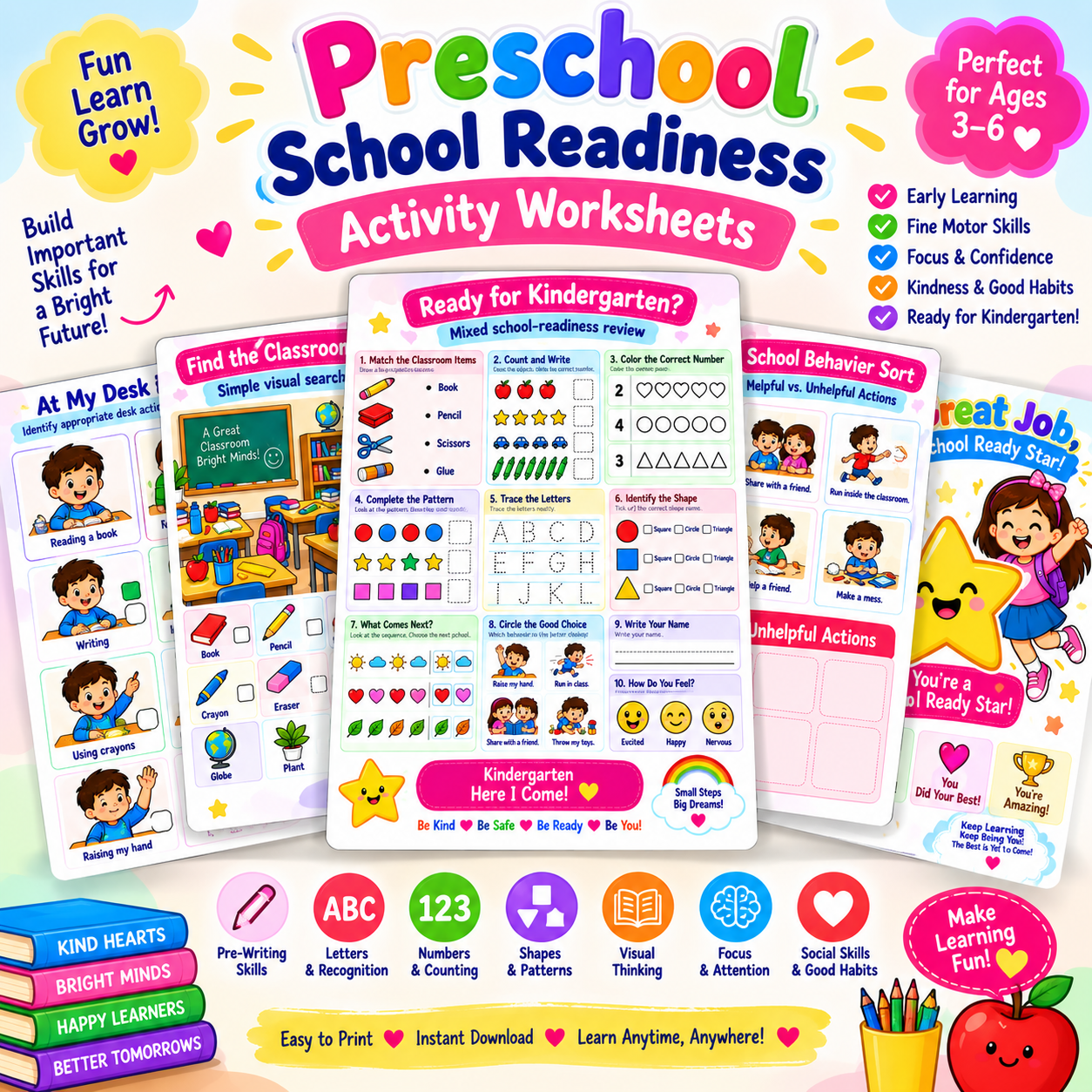
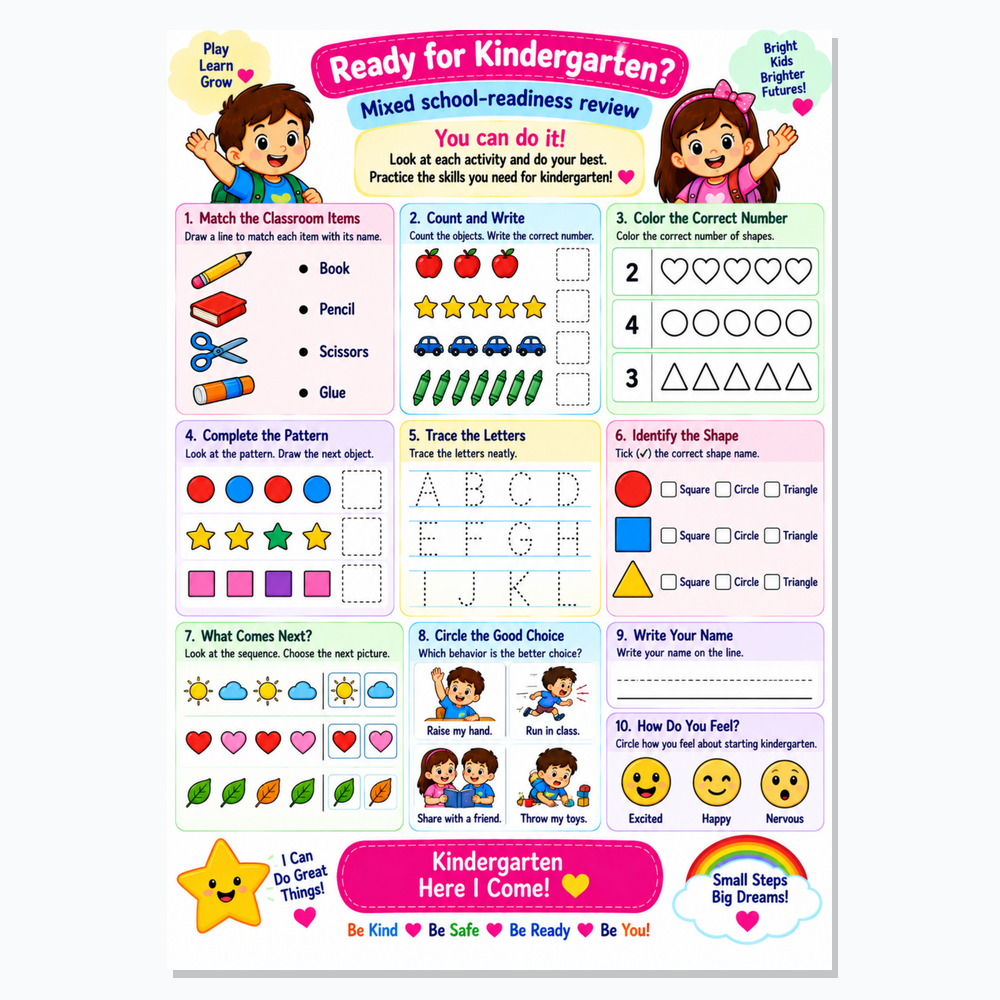
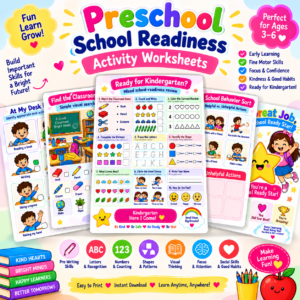
The Ultimate School Readiness Worksheets for Kids collection provides simple printable activities focused on everyday school experiences. Children can explore classroom objects, school routines, instructions, supplies, classroom behavior, and basic kindergarten preparation.
What Does School Readiness Mean?
School readiness is not only about knowing letters, numbers, or academic facts. Young children also benefit from learning how a classroom works and how to participate in everyday school activities.
This can include recognizing common school items, following directions, taking turns, listening, keeping materials organized, and becoming more independent.
These worksheets introduce many of these ideas through easy visual activities.
Get Familiar With the Classroom
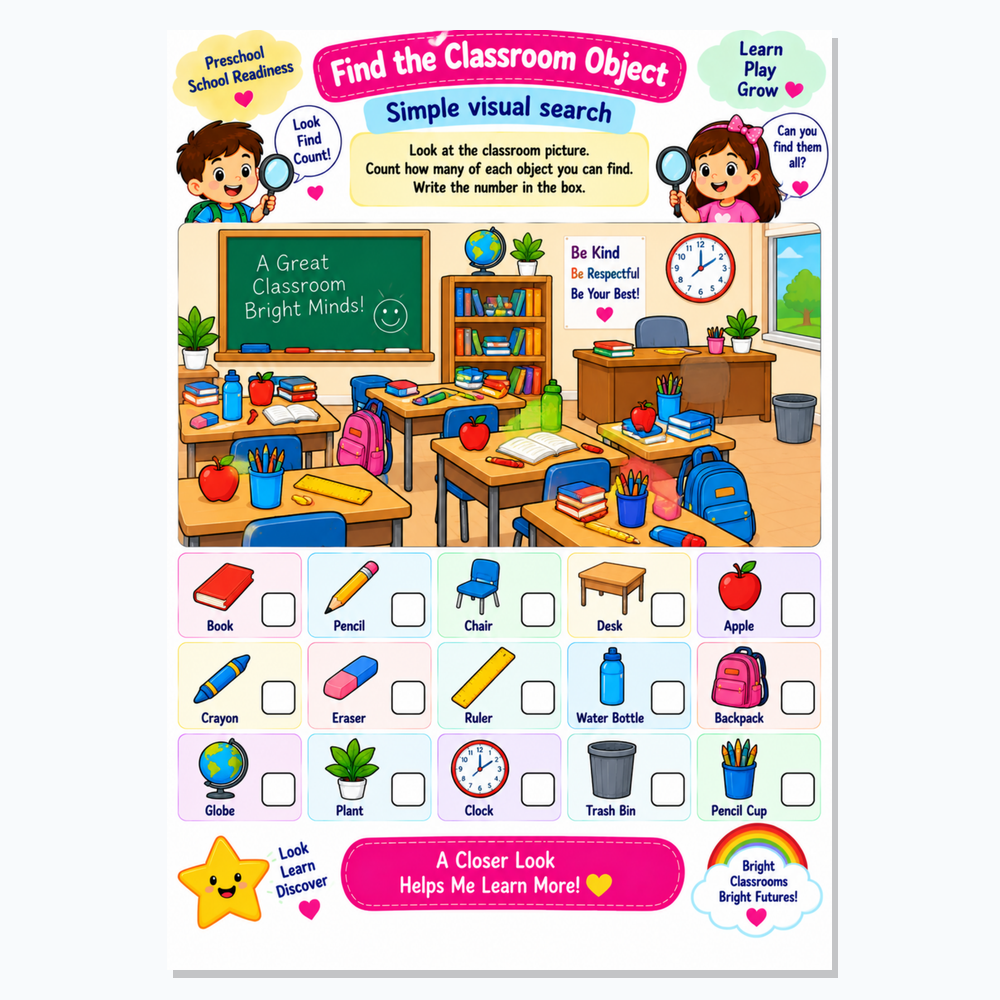
A new classroom can contain many unfamiliar objects. Learning about them ahead of time can help children feel more comfortable when they enter school.
The activities can introduce common classroom items such as:
- Desks
- Chairs
- Books
- Backpacks
- Pencils
- Crayons
- Notebooks
- Classroom boards
- Erasers
- Other familiar school materials
Children can learn to recognize these items and understand their connection to classroom life.
Learn Everyday School Routines
Preschoolers often benefit from knowing what usually happens during a school day.
Routine-based activities can introduce situations such as arriving at school, putting belongings away, sitting for an activity, joining a line, cleaning up, and preparing for the next task.
Learning about routines through pictures and simple activities gives children a chance to think about what comes next.
Practice Following Simple Instructions
Being able to listen and respond to a short instruction is an important classroom skill.
The worksheets can give children practice with simple directions involving actions, choices, or classroom situations.
For example, a child might need to identify the correct action after seeing a simple instruction or choose the appropriate response from several options.
These activities encourage children to pause, listen, understand, and act.
Recognize School Supplies
Children will encounter many supplies during their school day. Becoming familiar with these items before kindergarten can make them feel less confusing.
School-supply activities can introduce objects such as pencils, crayons, erasers, notebooks, rulers, and other common materials.
Children can identify items and complete simple matching-based tasks using school-related pictures.
Explore Positive Classroom Behavior
Classrooms work best when children understand simple social expectations.
The behavior activities can introduce ideas such as:
- Listening when someone is speaking
- Waiting for a turn
- Sharing materials
- Raising a hand
- Keeping hands to themselves
- Cleaning up after an activity
- Treating classroom materials with care
The purpose is to help children become familiar with positive classroom habits in an age-appropriate way.
Getting Ready for Kindergarten
Kindergarten introduces a more structured learning environment, so children may need time to become comfortable with new expectations.
Preparation activities can help children think about:
- Going to school
- Carrying and organizing belongings
- Participating in classroom routines
- Following directions
- Using school supplies
- Working around other children
- Becoming more independent
These are practical parts of preparing for the school experience.
Skills Children Can Build
School-readiness activities can support more than knowledge about school.
Listening and Following Directions
Children practice paying attention to a task and responding appropriately.
Independence
Simple school-related routines can encourage children to think about what they can do for themselves.
Social Awareness
Classroom behavior activities introduce ideas such as sharing, waiting, listening, and cooperating.
Familiarity With School Materials
Recognizing common classroom supplies can make everyday tasks easier to understand.
Routine Awareness
Children can become more familiar with the idea that a school day follows a sequence of activities.
Confidence
Knowing a little about what to expect can help a child approach a new environment with greater familiarity.
A Simple Way to Use the Worksheets
There is no need to complete every page in one sitting. A few minutes of practice at a time can be enough.
Try this routine:
- Choose one school-readiness topic.
- Talk about what the child sees.
- Explain the activity in simple language.
- Let the child complete the page.
- Discuss the situation afterward.
- Connect it to a real-life school experience.
This approach makes the worksheet more meaningful than treating it as a simple paper exercise.
Turn Worksheets Into Real-Life Practice
The ideas in these pages can easily be used away from the worksheet.
For example, after discussing classroom cleanup, let the child practice putting toys away. After working on following instructions, give a short everyday instruction and let the child complete it.
These small activities can help children connect the concept with something they actually do.
Preparing Children for Classroom Routines
Parents and educators can introduce simple routines before school begins.
A child can practice putting materials in one place, sitting for a short activity, waiting before speaking, and following a short sequence of instructions.
These habits can gradually become more familiar when they are practiced in a relaxed environment.
School Readiness at Home
Parents can use these worksheets as part of a home-learning routine without turning them into a formal lesson.
Discuss school situations naturally and allow children to ask questions. Talking about what happens during arrival, class time, breaks, and cleanup can make school feel more familiar.
Children can also practice simple independence skills at home, such as organizing their belongings or preparing materials for an activity.
School Readiness in the Classroom
Teachers can use these activities during preschool sessions, learning centers, or transition activities.
A teacher might introduce a school routine with a discussion, complete a worksheet with the group, and then allow children to practice the same idea through role-play.
This can make the worksheets part of a broader school-readiness lesson.
Making Kindergarten Preparation Positive
Not every child will feel exactly the same about starting school. Some may be excited, while others may feel uncertain about the new environment.
Positive conversations can help. Instead of presenting school as something to worry about, talk about familiar activities children will experience, such as meeting teachers, using crayons, reading books, playing, and learning with classmates.
The aim is to make the idea of school feel understandable and approachable.
Who Can Use School Readiness Worksheets?
These printable activities can be useful for:
- Parents
- Preschool teachers
- Homeschool families
- Tutors
- Childcare providers
- Early-learning programs
They can be used at home, in preschool classrooms, during preparation sessions, or as extra practice before kindergarten.
When Should Children Start Preparing for School?
There is no single starting point that works for every child. School-readiness practice can be introduced gradually whenever a child begins showing interest in school, routines, classroom activities, or becoming more independent.
Simple activities can be introduced first, with more situations added over time.
The objective is familiarity and confidence, not perfection.
Why Printable School Readiness Activities Are Useful
Printable worksheets provide an organized way to introduce everyday school concepts.
They can be especially useful when adults want ready-to-use activities covering several different areas of school preparation. Instead of discussing every topic separately, the child can explore a range of school-related situations through pictures and guided tasks.
A Complete Introduction to School Life
The collection brings several practical topics together:
Classroom objects help children recognize their surroundings.
School routines introduce the flow of a typical day.
Simple instructions provide practice with listening and responding.
School supplies familiarize children with everyday learning materials.
Classroom behavior introduces positive habits and social expectations.
Kindergarten preparation brings these ideas together as children think about becoming school learners.
Build a Comfortable Start
Preparing for kindergarten is about more than academic skills. Children can also benefit from knowing what classroom materials look like, understanding simple routines, listening to directions, and practicing respectful behavior.
The Ultimate School Readiness Worksheets for Kids collection provides a printable way to explore these everyday concepts before or during the transition into school.
Frequently Asked Questions
What are school readiness worksheets?
School readiness worksheets are printable activities that introduce children to common school situations, materials, routines, instructions, and classroom habits.
What topics are included in this pack?
The pack covers classroom objects, school routines, simple instructions, school supplies, classroom behavior, and getting ready for kindergarten.
What skills can children practice?
Children can practice listening, following directions, recognizing school materials, understanding routines, social awareness, independence, and classroom habits.
Are these worksheets designed for preschool children?
Yes. The activities are intended for preschool-age learners who are beginning to become familiar with the idea of school and kindergarten.
Can parents use these worksheets at home?
Yes. Parents can use them during home learning, kindergarten preparation, quiet activity time, or everyday discussions about school.
Can teachers use them in preschool classrooms?
Yes. Teachers can use the activities for classroom discussions, individual practice, learning centers, small groups, or school-readiness lessons.
What are classroom behavior activities?
They introduce age-appropriate situations involving listening, sharing, waiting, raising a hand, caring for materials, and cleaning up.
Why should children learn about school routines?
Knowing what may happen during a school day can make new routines more familiar and easier to understand.
Do these worksheets teach academic subjects?
The main purpose is school readiness rather than formal academic instruction. They focus on practical classroom knowledge, routines, behavior, and preparation for kindergarten.
How can parents make school preparation more effective?
Combine the worksheets with real-life practice. Talk about school routines, let children organize their belongings, and provide simple opportunities to follow directions independently.
Should children complete every page before kindergarten?
No. The worksheets can be used gradually according to the child’s needs and familiarity with school concepts.
What if a child feels nervous about starting school?
Keep conversations positive and simple. Talk about familiar school activities, answer questions honestly, and give the child opportunities to practice small routines before the first day.
Reviews
There are no reviews yet.