
Ultimate Preschool Color Worksheets for Kids
Colors are one of the first visual concepts children notice in everyday life. A bright red apple, a blue ball, a green leaf, or a yellow toy can all become simple learning opportunities.
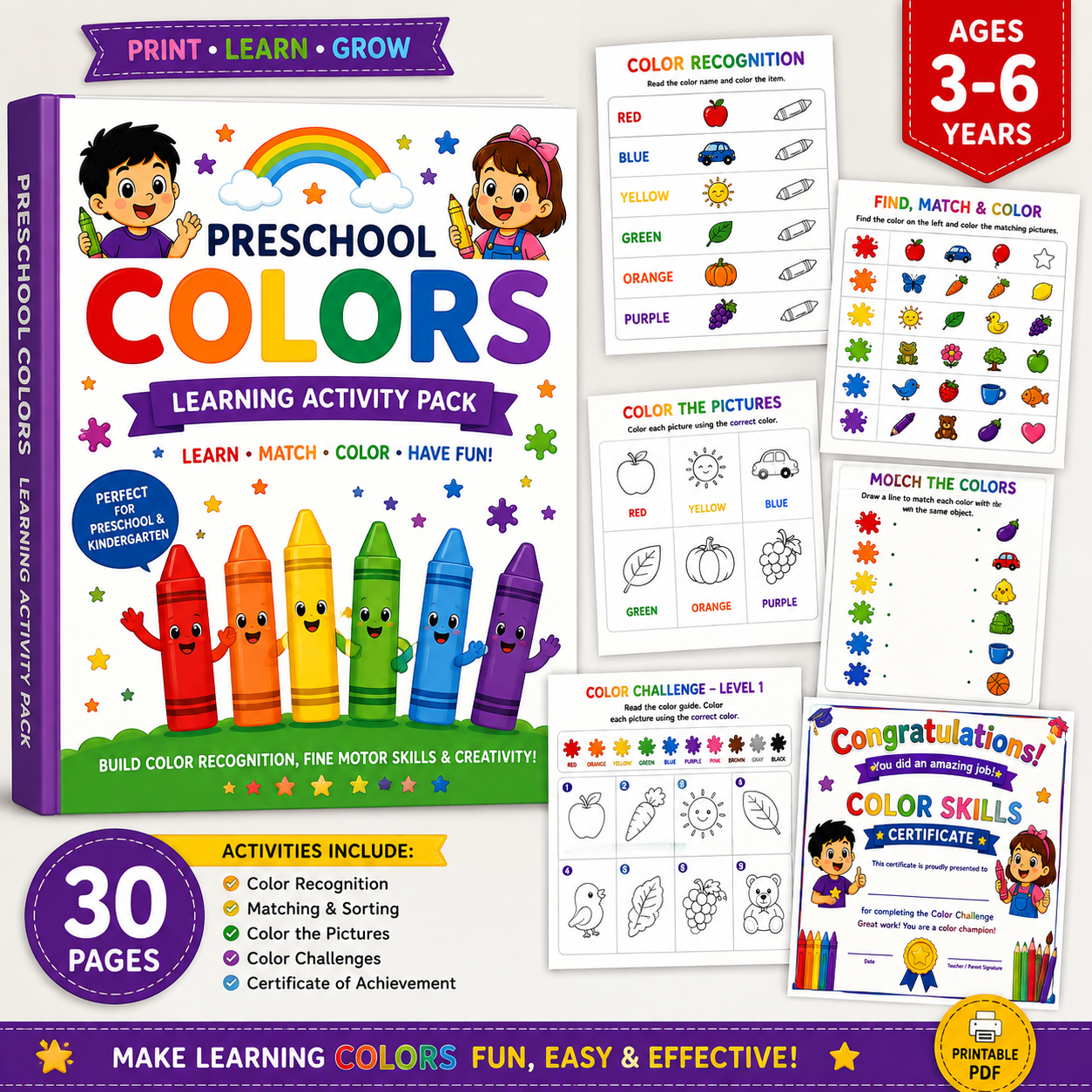
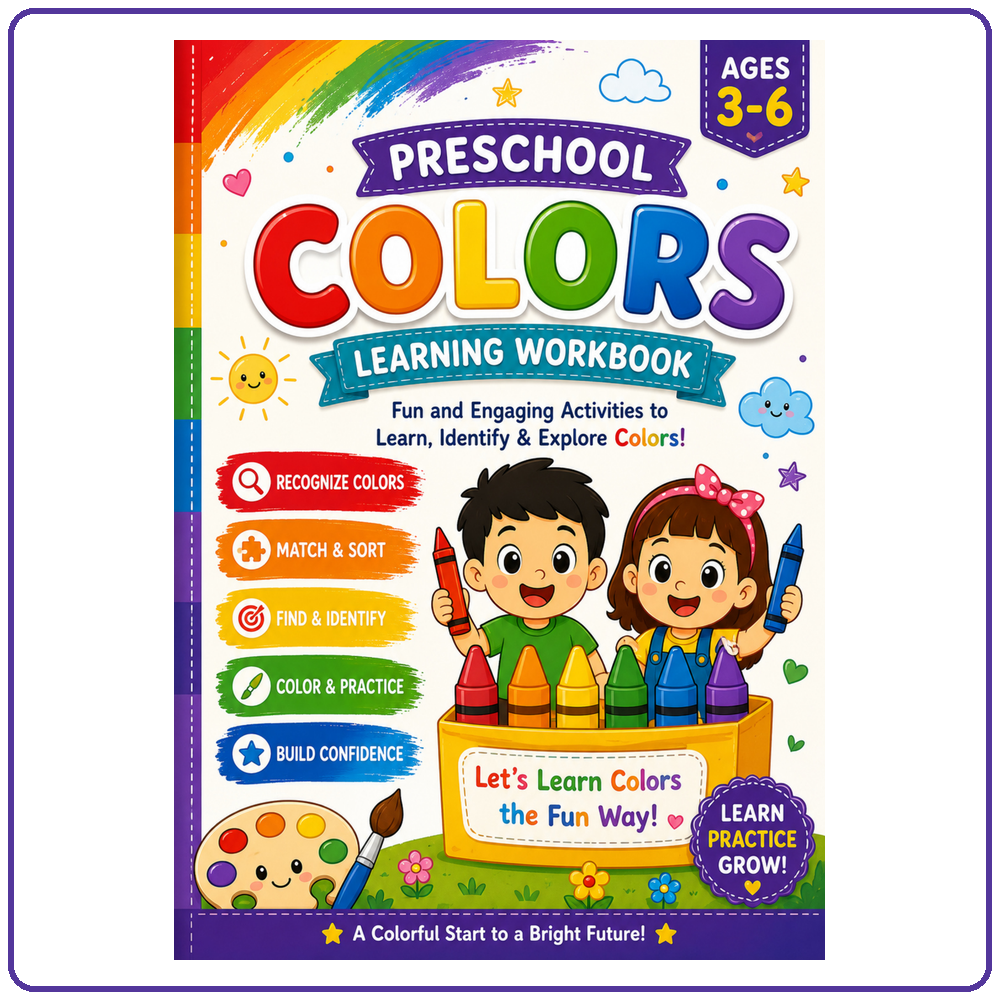
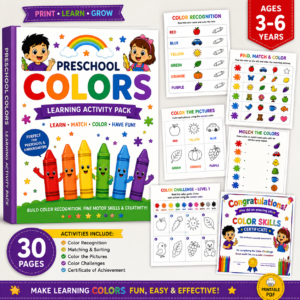
The Ultimate Preschool Color Worksheets for Kids collection turns color exploration into easy printable activities. Children can look at colors, compare them, find them, identify them, and work with them through a variety of preschool-friendly exercises.
Explore Colors in Simple Steps
Learning colors becomes easier when children get repeated opportunities to work with them in different ways. Instead of using the same task over and over, this pack offers several activity styles.
Children can practice:
- Recognizing basic colors
- Matching similar colors
- Grouping items by color
- Finding a requested color
- Identifying colors in pictures
- Completing simple color-based activities
Each activity gives children another chance to become familiar with common colors.
Begin With Basic Color Recognition
The first step is simply noticing and remembering colors.
Children can become familiar with common shades such as red, blue, yellow, green, orange, and purple. Simple visual examples give them a chance to connect a color with what they see on the page.
Parents and teachers can also say the color name aloud while the child looks at the example. This can make the worksheet activity more interactive.
Match Colors That Belong Together
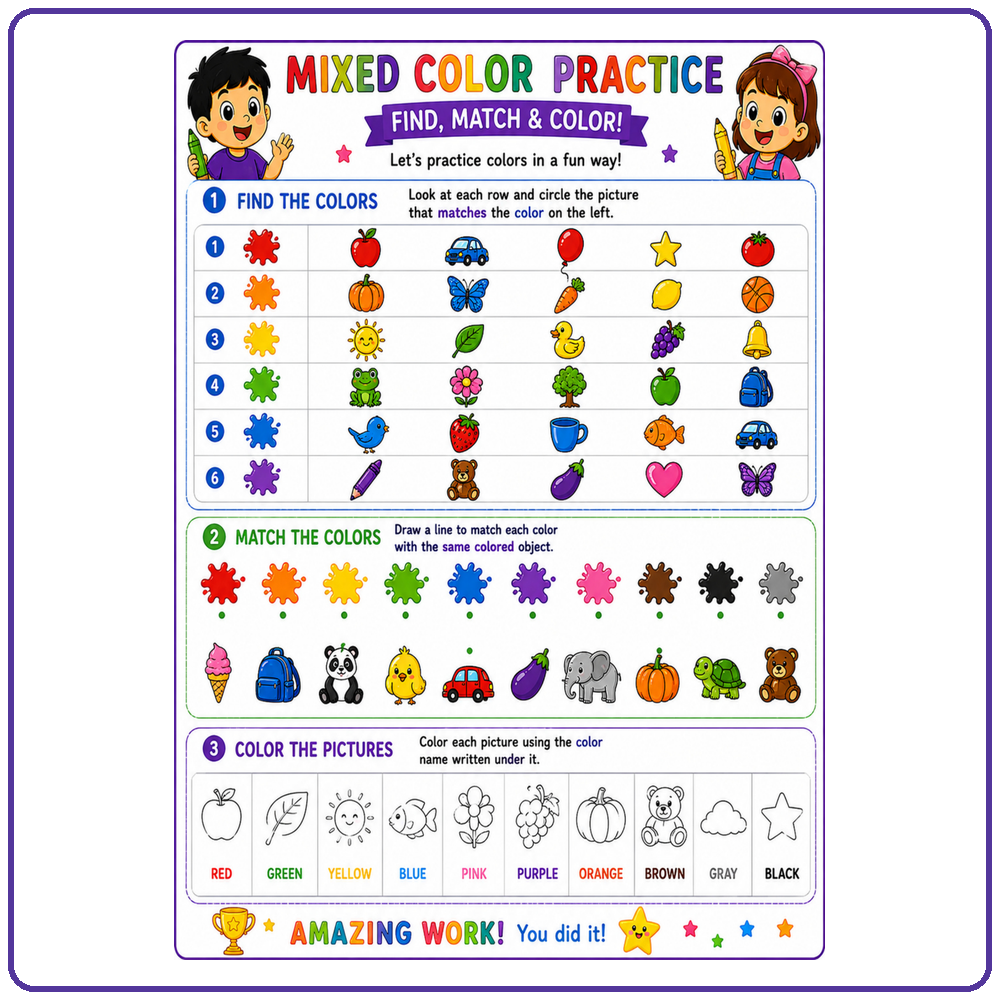
Color matching asks children to compare visual examples and connect items that share the same color.
For example, a child may see several colored objects and need to connect each one with its corresponding color.
This gives children practice looking carefully and noticing when two visual examples have something in common.
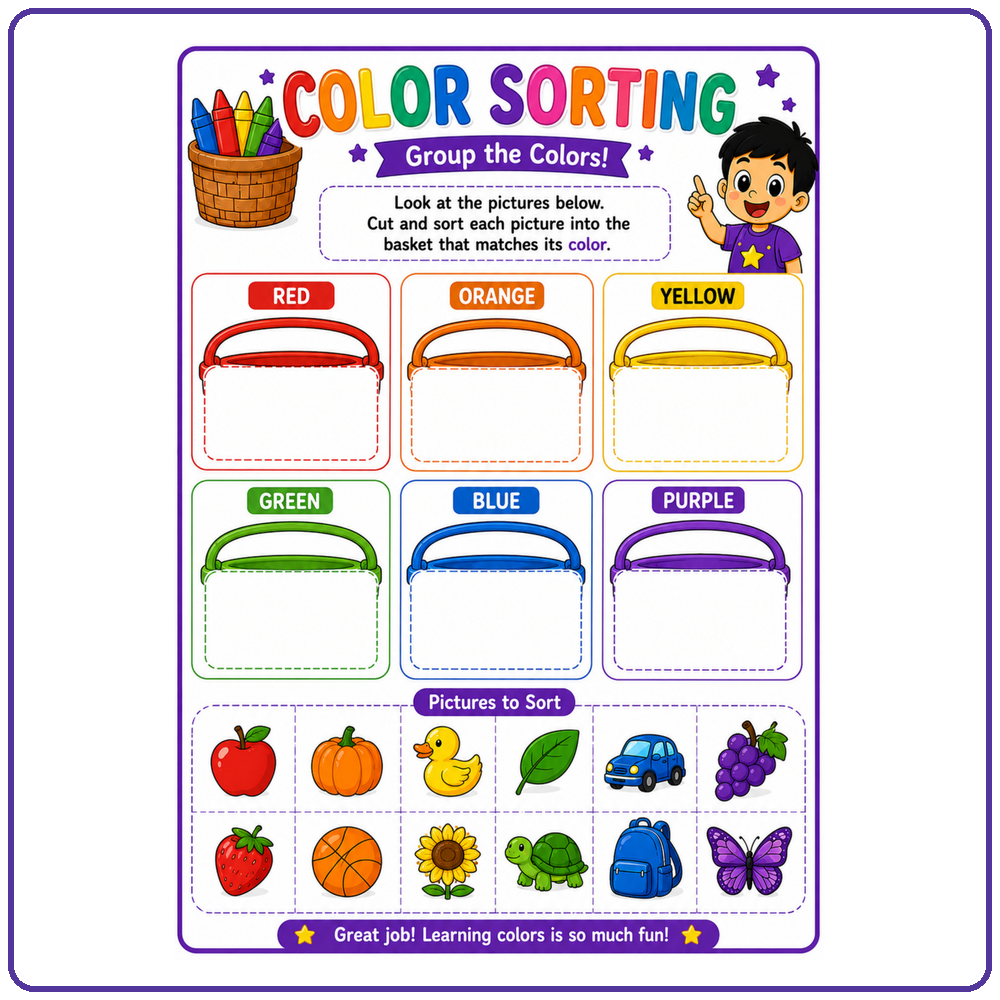
Sort Items by Color
Sorting adds a different kind of challenge.
Rather than finding just one match, children organize several items into color groups. Red items can go together, blue items can form another group, and so on.
This type of activity encourages children to focus on one characteristic while organizing multiple choices.
Find the Requested Color
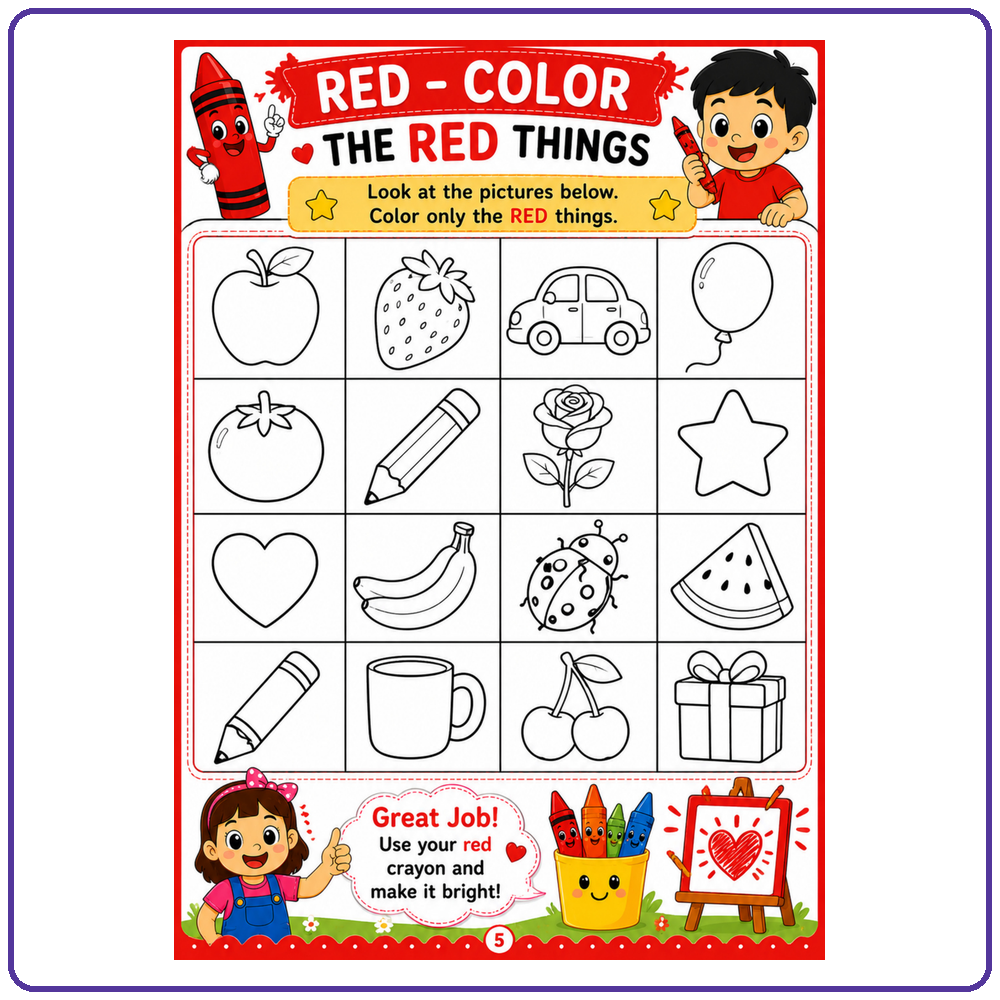
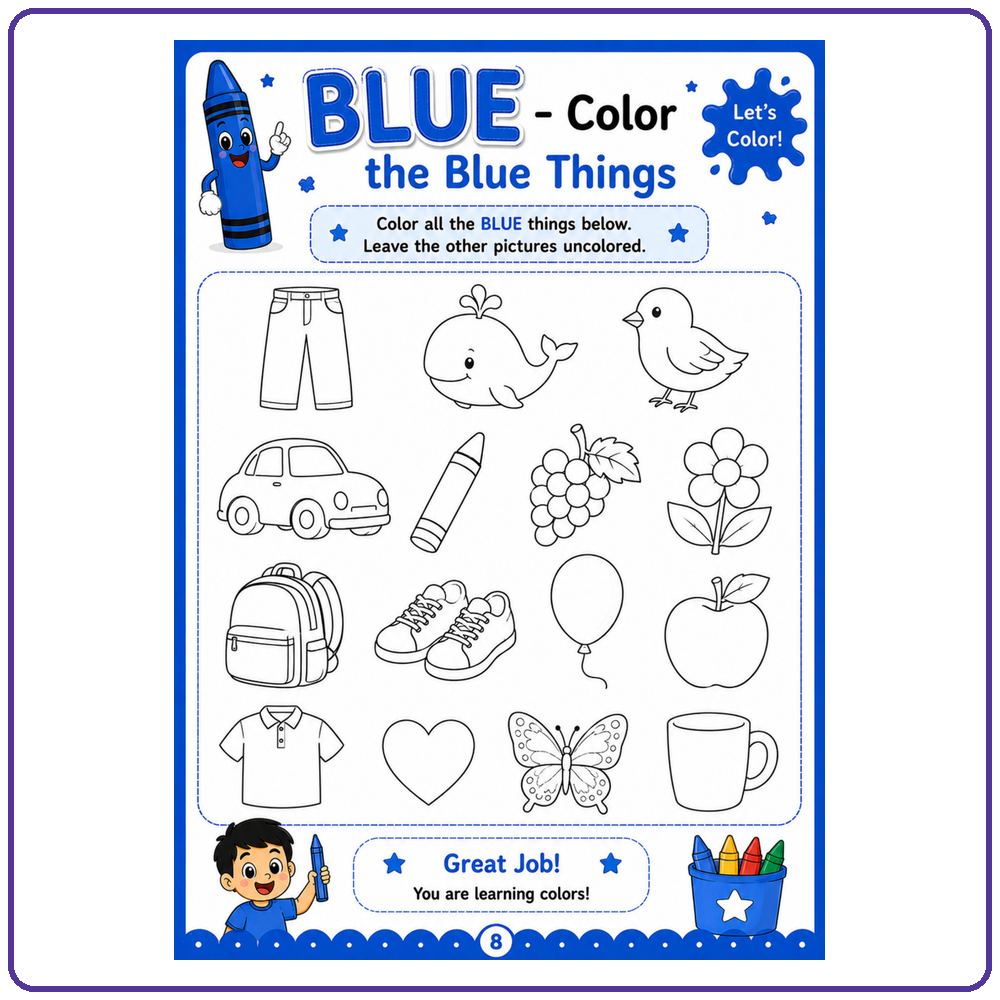
In these activities, children are given a target color and asked to locate it among different choices.
The page may contain several colored pictures or shapes, requiring the child to search carefully before making a selection.
This creates a simple visual-search exercise while reinforcing color recognition.
Identify Colors in Pictures
Color-identification tasks encourage children to look at an image and determine its color.
For younger learners, familiar objects can make the activity easier to understand. Seeing a known object in a particular color gives children another way to connect color names with visual examples.
Simple Color Activities for Extra Practice
The pack also includes straightforward color activities that add variety to the learning experience.
These can give children additional opportunities to choose, recognize, compare, or work with colors without making the tasks too complicated.
The goal is to keep practice accessible while giving children enough variety to stay interested.
Skills Children Can Practice
Color worksheets can support several early-learning abilities.
Color Recognition
Children become more familiar with common colors through repeated visual exposure.
Visual Attention
Looking for a particular color encourages children to focus on details rather than choosing randomly.
Comparison
Matching and sorting require children to compare visual examples and decide whether they share the same color.
Classification
Grouping objects by color introduces the idea of organizing things according to a common feature.
Following Directions
Simple instructions encourage children to listen or read along and complete a specific task.
Concentration
Searching, matching, and sorting give children a clear goal that requires focused attention.
Easy Ways to Use the Worksheets
A young child does not need to complete the entire pack in one sitting.
A simple routine can work well:
- Choose one activity.
- Name the colors shown on the page.
- Explain the task briefly.
- Let the child examine the pictures.
- Allow time for them to make their own choices.
- Talk about the answers afterward.
- Move to another activity when they are ready.
Short sessions can make learning feel relaxed and enjoyable.
Make Color Learning Part of Everyday Life
Worksheet practice can be reinforced outside the learning space.
Parents can ask children to identify colors on clothing, toys, books, fruits, traffic signs, or other familiar objects. During playtime, children can also group toys according to color.
These everyday observations can help children see that colors are not limited to worksheet pages.
Color Learning at Home
Parents can keep a few printed pages ready for quiet learning time.
A child might complete a matching page one day and try a sorting activity another day. Repeating a familiar color concept through a new activity format can help keep practice fresh.
There is also no need to make every session feel like a formal lesson. Casual conversation about colors can be part of the learning process.
Using Color Worksheets in Preschool
Teachers can introduce colors to a group before handing out individual pages.
For example, the teacher can display a few colored objects, say their names, and ask children to identify them. The class can then move to a related worksheet activity.
These pages can also be useful during learning centers, small-group practice, or quiet independent work.
Tips for Better Color Practice
Keep the activities simple and encouraging.
- Start with colors that are easy to recognize.
- Introduce additional colors gradually.
- Ask children to say color names aloud.
- Give them enough time to look before answering.
- Use real objects alongside worksheets when possible.
- Celebrate effort and careful observation.
- Repeat activities when extra practice is useful.
A relaxed approach can help children stay interested.
Connect Colors With Familiar Objects
Children often understand color concepts more easily when they can connect them with something recognizable.
A red worksheet picture can be discussed alongside a red toy. A green item on the page can be connected to a leaf or another familiar object.
These connections give children more opportunities to use color vocabulary naturally.
When Can Children Begin Learning Colors?
Many children start noticing colors naturally during the preschool years. Some quickly remember several color names, while others need more repetition.
There is no need to expect every child to progress in exactly the same way. Start with simple examples and gradually add more variety as the child becomes comfortable.
Why Printable Color Activities Are Convenient
Printable worksheets offer a simple resource for parents and educators who need ready-to-use activities.
They can be used for:
- Preschool learning
- Homeschool practice
- Home activities
- Classroom centers
- Quiet time
- Extra color practice
Because the activities are printable, selected pages can be used whenever additional practice is needed.
From Recognizing to Using Colors
A strong color-learning routine can move through several stages.
Children can first notice a color, then match it, group it, find it, and identify it in different contexts.
This variety gives them more than one way to interact with the same concept.
A Playful Approach to Early Color Learning
Color learning can be simple, interactive, and enjoyable. Children can explore visual examples while practicing skills such as comparison, grouping, searching, and identification.
The Ultimate Preschool Color Worksheets for Kids collection brings these ideas together in a printable format designed for early learners.
Frequently Asked Questions
What are preschool color worksheets?
Preschool color worksheets are printable learning pages that help young children recognize, compare, match, sort, and identify colors through simple activities.
What activities are included in this color pack?
The collection includes basic color recognition, color matching, color sorting, finding a requested color, color identification, and simple color activities.
What colors can children practice?
The activities can introduce common preschool colors such as red, blue, yellow, green, orange, and purple, depending on the individual worksheet.
What skills can children develop through color activities?
Children can practice color recognition, visual attention, comparison, classification, concentration, and following simple directions.
Are these worksheets suitable for preschool children?
Yes. They are designed around basic color concepts and simple activities appropriate for preschool-level learning.
Can parents use the worksheets at home?
Yes. Parents can print the pages for home learning, quiet activity time, or additional practice.
Can teachers use them in the classroom?
Yes. Teachers can use the worksheets for individual work, small groups, learning centers, or color-learning lessons.
How can I make color learning more engaging?
Connect worksheet activities with real objects. Ask children to find items around them that have the same color as the examples on the page.
Should children learn many colors at once?
Not necessarily. Starting with a small number of familiar colors can make the first activities easier. Additional colors can be introduced gradually.
Can children repeat the same color activity?
Yes. Repetition can provide useful practice, especially when children are still becoming familiar with color names and differences.
What if a child has trouble identifying a color?
Return to a simple example, say the color name clearly, and connect it with a familiar object. Give the child time to look and try again without pressure.
Are these activities only useful for teaching color names?
No. They also provide practice with comparing, grouping, visual searching, classification, and focused observation.
Reviews
There are no reviews yet.