Fun Preschool Sorting Worksheets for Kids
Sorting is a simple activity that helps young children learn how to organize information. When children group items according to a shared feature, they practice noticing characteristics such as color, size, shape, type, and category.
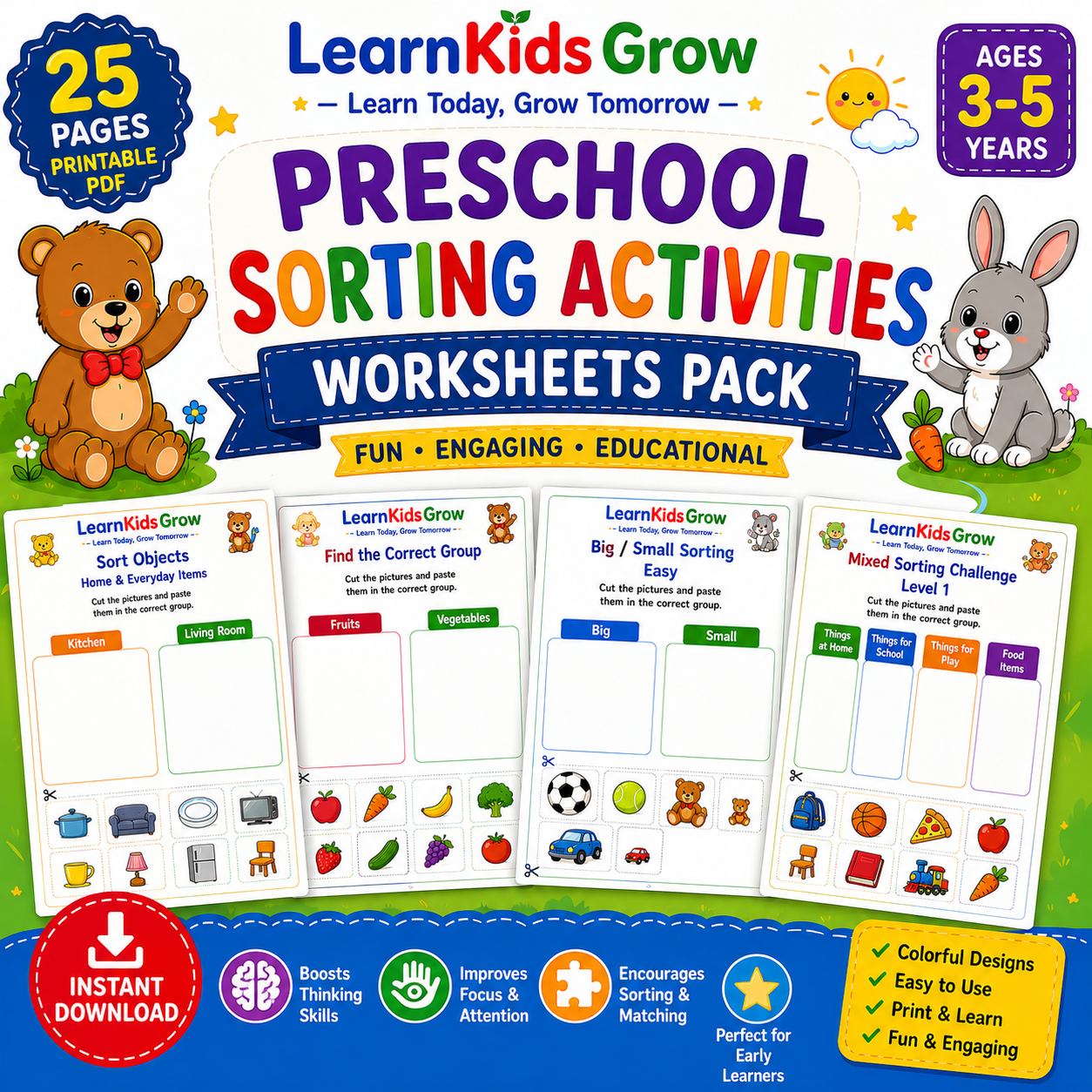
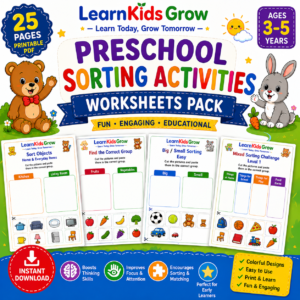
Preschool sorting worksheets provide an easy, structured way to introduce these concepts through familiar pictures and playful activities. This printable pack gives children opportunities to sort colors, sizes, shapes, animals, food, and everyday objects.
What Are Preschool Sorting Worksheets?
Preschool sorting worksheets are printable activities where children organize pictures or objects into groups based on a specific rule.
For example, a worksheet might ask a child to place red items in one group and blue items in another. Another activity may ask them to separate large objects from small ones.
These tasks encourage children to look carefully at each item and decide where it belongs.
Why Sorting Is Important for Preschoolers
Sorting is more than putting similar things together. It encourages children to observe details, compare characteristics, and make simple decisions.
Sorting activities can help children practice:
- Observation
- Classification
- Comparison
- Logical thinking
- Attention to detail
- Decision-making
- Early problem-solving
- Following simple directions
These skills can support many other early-learning activities.
What Is Included in This Sorting Pack?
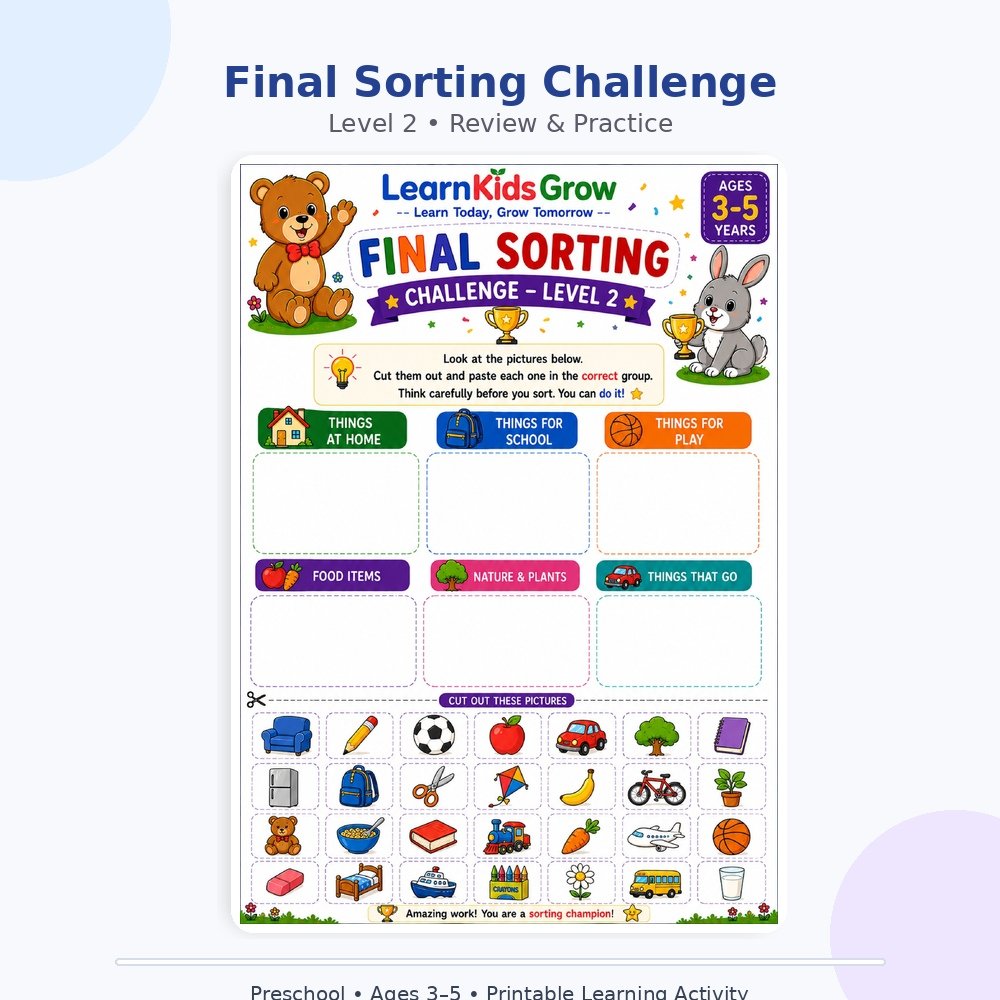
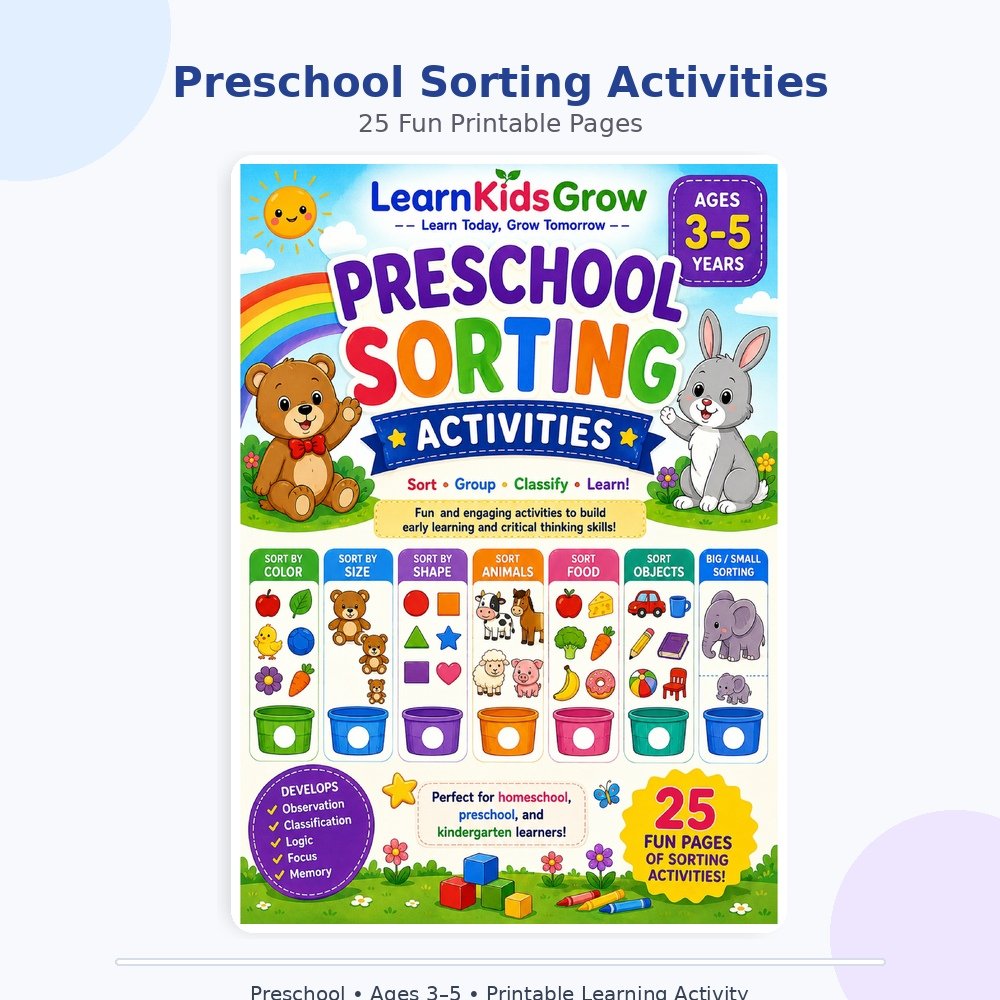
This activity pack includes different sorting themes so children can practice classification in several ways.
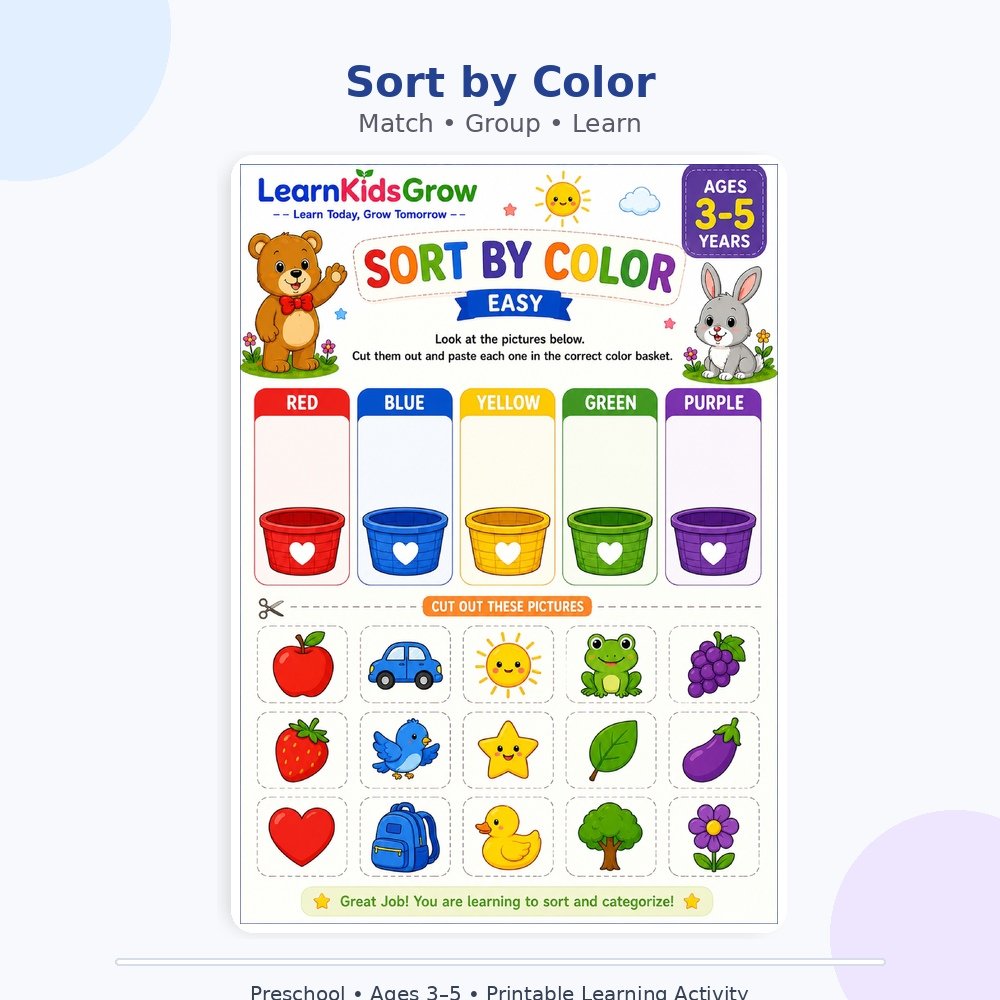
Sort by Color
Children group pictures according to their colors. They may identify which items belong in a particular color group and place them together.
Color sorting gives children a simple way to practice noticing visual characteristics.
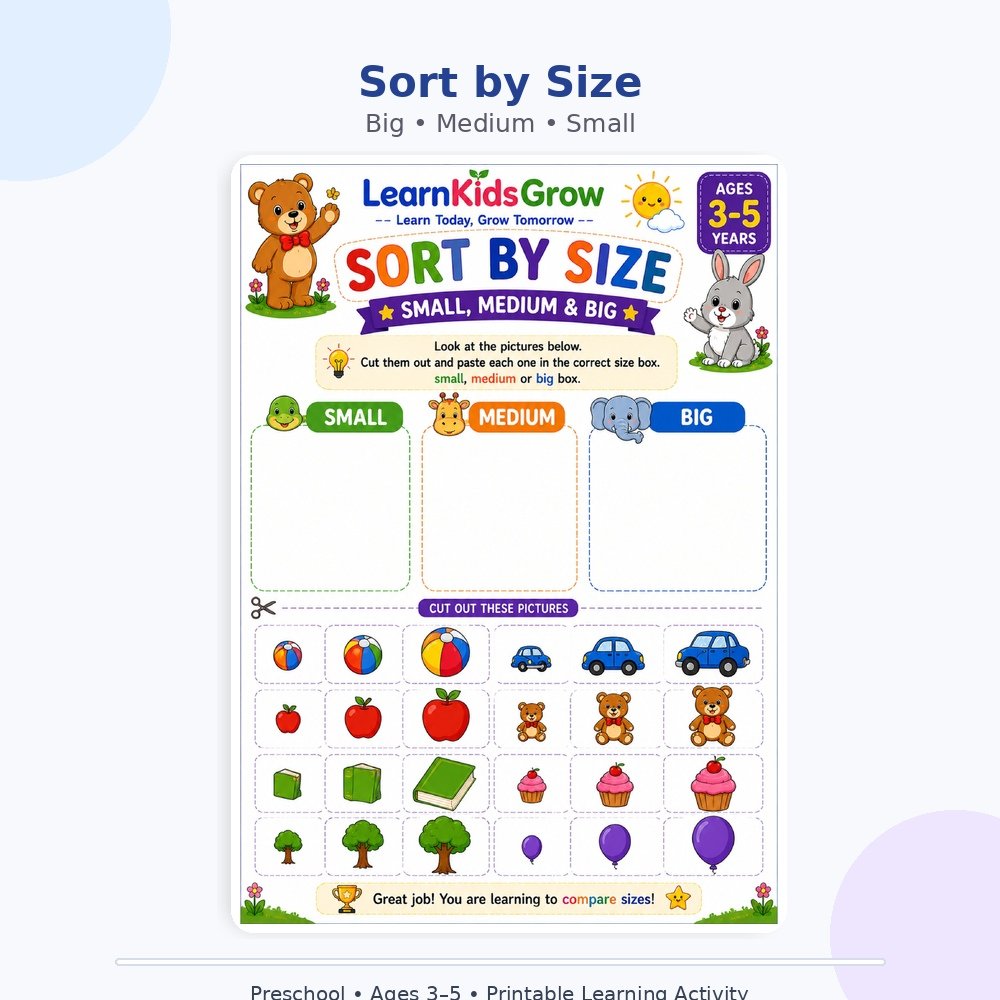
Sort by Size
Size-based activities encourage children to compare objects and identify which items belong in different size groups.
Children can practice noticing whether an item is larger or smaller than another.
Sort by Shape
Shape sorting introduces grouping based on the form of an item. Children look at different shapes and organize them according to their matching shape category.
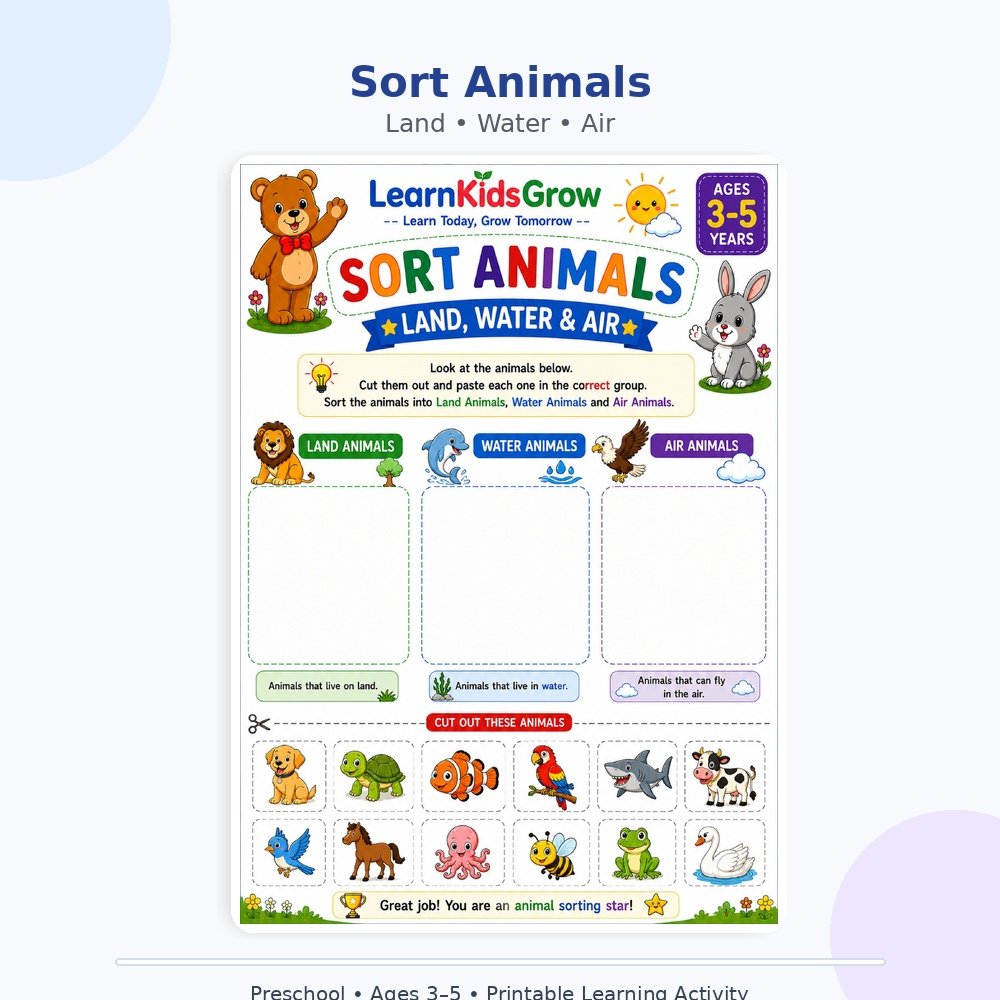
Sort Animals
Children group animal pictures according to the category shown on the worksheet.
This type of activity encourages children to recognize familiar animals and organize them into appropriate groups.
Sort Food
Food-sorting activities use familiar foods to introduce category-based grouping.
Children examine different food pictures and place them into the correct group according to the sorting rule.
Sort Objects
Everyday objects give children another opportunity to practice classification.
Children can examine familiar items and decide which group each object belongs to.
Big and Small Sorting
These activities focus specifically on comparing object sizes. Children identify larger and smaller items and place them into the appropriate group.
This provides an easy introduction to size comparison.
How Sorting Worksheets Build Early Thinking Skills
When children sort objects, they need to notice what makes one item similar to or different from another.
For example, if a worksheet asks children to sort by color, they need to focus on color rather than the object’s type. If the task is based on size, they need to pay attention to how large or small each item appears.
Changing the sorting rule helps children learn that the same item can be grouped in different ways depending on the goal.
Skills Children Can Practice
Classification: Children learn to place items into groups based on shared characteristics.
Observation: Children look closely at each picture before making a decision.
Comparison: Sorting encourages children to compare items and notice similarities or differences.
Logical thinking: Children consider a simple rule and use it to organize information.
Following directions: Worksheets provide a clear task that children can follow independently with practice.
Attention: Finding the correct group encourages children to stay focused on the activity.
Who Can Use Preschool Sorting Worksheets?
These worksheets can be useful for parents, preschool teachers, homeschool educators, tutors, and caregivers.
They can be included in:
- Preschool lessons
- Homeschool activities
- Home learning
- Classroom learning centers
- Quiet educational time
- Early-learning practice
- Additional classification activities
Adults can select simpler or more challenging pages depending on the child’s current abilities.
How to Use Sorting Worksheets
Start with a simple sorting rule that the child already understands. Explain what each group represents before beginning.
A basic routine can be:
- Choose one sorting worksheet.
- Explain the sorting rule.
- Look at a few examples together.
- Let the child examine each picture.
- Ask the child to place or mark each item in the correct group.
- Talk about the choices afterward.
- Introduce another sorting rule when the child is ready.
Giving children enough time to think can make the activity more enjoyable.
Tips for Making Sorting Practice Fun
Sorting can easily become a playful learning activity.
Try these ideas:
- Begin with familiar objects.
- Use short practice sessions.
- Ask children to explain why an item belongs in a group.
- Let children choose between a few activity pages.
- Praise careful thinking and effort.
- Repeat activities when useful.
- Gradually introduce new sorting rules.
You can also connect worksheet activities to everyday life by sorting toys, clothing, household items, or other safe objects together.
Sorting Activities at Home
Parents can use sorting worksheets as part of a simple home-learning routine.
After completing a worksheet, continue the idea away from the page. For example, children can group toys by type, organize crayons by color, or separate objects into large and small groups.
These real-world activities can reinforce the same basic classification concepts in a natural way.
Sorting Activities in the Classroom
Preschool teachers can use sorting worksheets during individual work, small groups, or learning centers.
A teacher can introduce the sorting rule first and then allow children to complete the activity independently. Children can also discuss their choices with classmates to practice explaining their thinking.
Different sorting themes provide variety throughout the school year.
When Can Children Start Sorting Activities?
Children develop early thinking skills at different rates. Many preschool-age learners can begin with simple sorting tasks involving obvious differences such as color or size.
Once children become comfortable with basic grouping, educators and parents can introduce more categories and less obvious differences.
The activity should match the child’s current level so that it remains challenging without becoming frustrating.
Printable Sorting Practice for Preschoolers
Printable worksheets are a convenient resource for home and classroom learning. They give children a clear visual task and allow parents or teachers to choose activities when additional practice is needed.
This pack combines several sorting concepts in one collection, giving children opportunities to practice classification using different themes.
Building Early Classification Skills
Children encounter sorting and grouping throughout everyday life. They see different colors, sizes, shapes, foods, animals, and objects and naturally begin noticing how things relate to one another.
Structured preschool sorting worksheets can give children extra opportunities to practice these observations in an organized way.
With simple, engaging activities, children can gradually become more confident at identifying categories and deciding where items belong.
Make Learning Fun With Sorting
Fun preschool sorting worksheets for kids provide an engaging way to practice classification, comparison, observation, and early logical thinking.
From colors and shapes to animals, food, objects, and big-and-small activities, children can explore different ways of organizing information while enjoying simple printable learning tasks.
Frequently Asked Questions
What are preschool sorting worksheets?
Preschool sorting worksheets are printable activities that ask children to organize pictures or objects into groups according to a specific characteristic or rule.
What skills do sorting worksheets develop?
They can help children practice classification, observation, comparison, logical thinking, attention, decision-making, and following simple directions.
What sorting activities are included?
The pack includes sorting by color, size, shape, animals, food, objects, and big-versus-small comparisons.
Are these worksheets suitable for preschool children?
Yes. The activities are designed around simple sorting and classification concepts suitable for preschool-age learners, with difficulty adjusted according to the child’s readiness.
Can parents use sorting worksheets at home?
Yes. Parents can print the activities for home learning, quiet time, or additional preschool practice.
Can teachers use these worksheets in the classroom?
Yes. Teachers can use them for individual work, small-group lessons, learning centers, or extra classification practice.
Why is sorting useful for young children?
Sorting encourages children to notice characteristics, compare items, recognize categories, and make simple decisions about where things belong.
How can I make sorting more engaging?
Ask children to explain their choices, connect worksheet activities to real objects, and turn sorting into a simple game or challenge.
Should children complete all the pages at once?
No. A few pages at a time can be enough. Children can move to new sorting concepts as their confidence grows.
Can children practice sorting without worksheets?
Yes. Everyday objects such as toys, crayons, clothes, or safe household items can be grouped by color, size, type, or another simple characteristic.
What is big-and-small sorting?
Big-and-small sorting asks children to compare objects by size and place them into the appropriate size group.
Reviews
There are no reviews yet.